
Hot Dog Market is expected to reach USD 27.93 Bn by 2030, The Hot Dog Market is driven by demand for high-quality beef hot dogs and increased demand for high-protein snacks.
Hot Dog Market to Hit USD 27.93 Bn by 2030
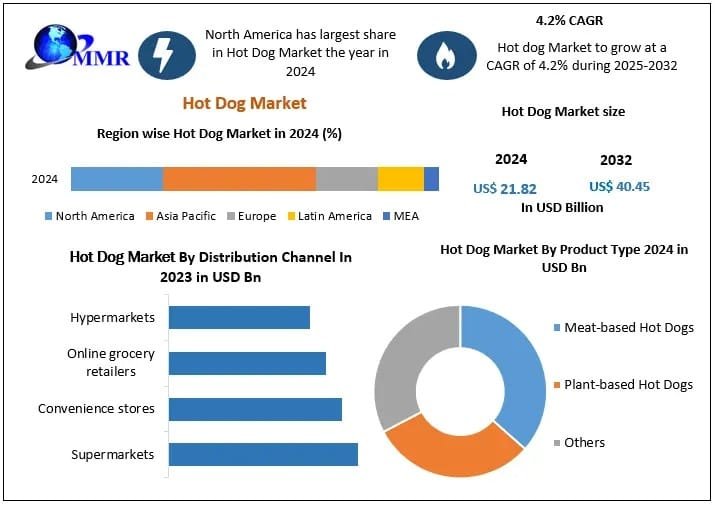
The Hot Dog Market was USD 20.94 Bn in 2023 and is expected to expand at a compound annual growth rate (CAGR) of 4.2 % from 2023 to 2030, reaching USD 27.93Bn by 2030. Hot dogs are popular among families and busy people since they are simple to make and frequently regarded as a fast supper. Hot dog manufacturers frequently use Seasonings, spices, herbs, and binders are just a few of the substances that improve the flavor and consistency of their products. Certain areas have a long history of eating hot dogs, particularly in places like Chicago and New York. Approximately 96% of American households consume hot dogs each year. Americans spent more than $8.3 billion on hot dogs and sausages in US stores in 2023 alone, demonstrating the substantial financial effect of hot dogs.
Available Exclusive Sample Copy of this Report @:
https://www.maximizemarketresearch.com/request-sample/194027/
Hot Dog Market Segmentation
By Type: Chicken Hot Dog is a healthier alternative to traditional beef and pork hot dogs. They appeal to consumers who are health-conscious since they contain fewer calories and fat. Beef Hot Dogs dominate the segment in terms of volume and it is the classic American cuisine. Pork Hot Dog, the demand has partly decreased as a result of red meat health concerns. Although many traditional recipes call for pigs in their hot dogs
By Distribution Channel: Supermarkets/Hypermarkets, Traditional, high-end, plant-based, and health-conscious hot dog options are all available at these shops. Convenience shop hot dogs are frequently already cooked and ready to eat right away. With the growth of e-commerce and delivery services, the online channel is becoming more and more popular as it is easy to order from home.
Hot Dog Market Regional Analysis
In the United States, The U.S. is known for its high consumption of hot dogs Over 20 billion hot dogs are consumed annually. In the United States, hot dogs are deeply ingrained in the culture, and they are frequently served as a mainstay at backyard barbecues, baseball games, and Fourth of July festivities.
German sausage industry is vast and includes hundreds of varieties including Bratwurst, currywurst, and bockwurst. Hot dogs and sausages (wurst) have a long history in Germany. In regions like Bavaria, bratwurst is the dominant sausage and hot dog which overshadows local specialties. Hot dogs are frequently sold on the street in places like Cologne and Düsseldorf.
China, compared to other culinary markets, the Chinese hot dog business is still relatively new, although it is expanding steadily. As Western fast-food franchises proliferate in China, in large cities like Guangzhou, Shanghai, and Beijing, Chinese consumers are getting used to hot dogs.
For an in-depth analysis, click the provided link:
https://www.maximizemarketresearch.com/request-sample/194027/
Hot Dog Market Competitive Landscape
Ball Park: Ball Park acquired Sara Lee Corporation and became a part of Sara Lee’s Meat Division. In return, Hillshire Brands, a spin-off of Sara Lee Corporation, acquired Ball Park Franks.
Meica: Meica was acquired by Vion Food Group food company based in the Netherlands. By purchasing Meica, Vion increased the range of products it offered in Germany. Vion Food Group strengthened its foothold in Germany with the acquisition of Meica.
Herta: Herta was purchased by the international food and beverage corporation Nestlé, based in Switzerland. A big shift took place when Nestlé sold its Herta meat division to Cargill
Conclusion
- To meet the increasing demand for cleaner-label and healthier goods, brands are adjusting by introducing low-fat, organic, plant-based, and reduced-sodium hot dogs.
- Demand is being driven, particularly in the food service and retail industries, by the shift towards premium products, such as those with premium ingredients and distinctive tastes.