

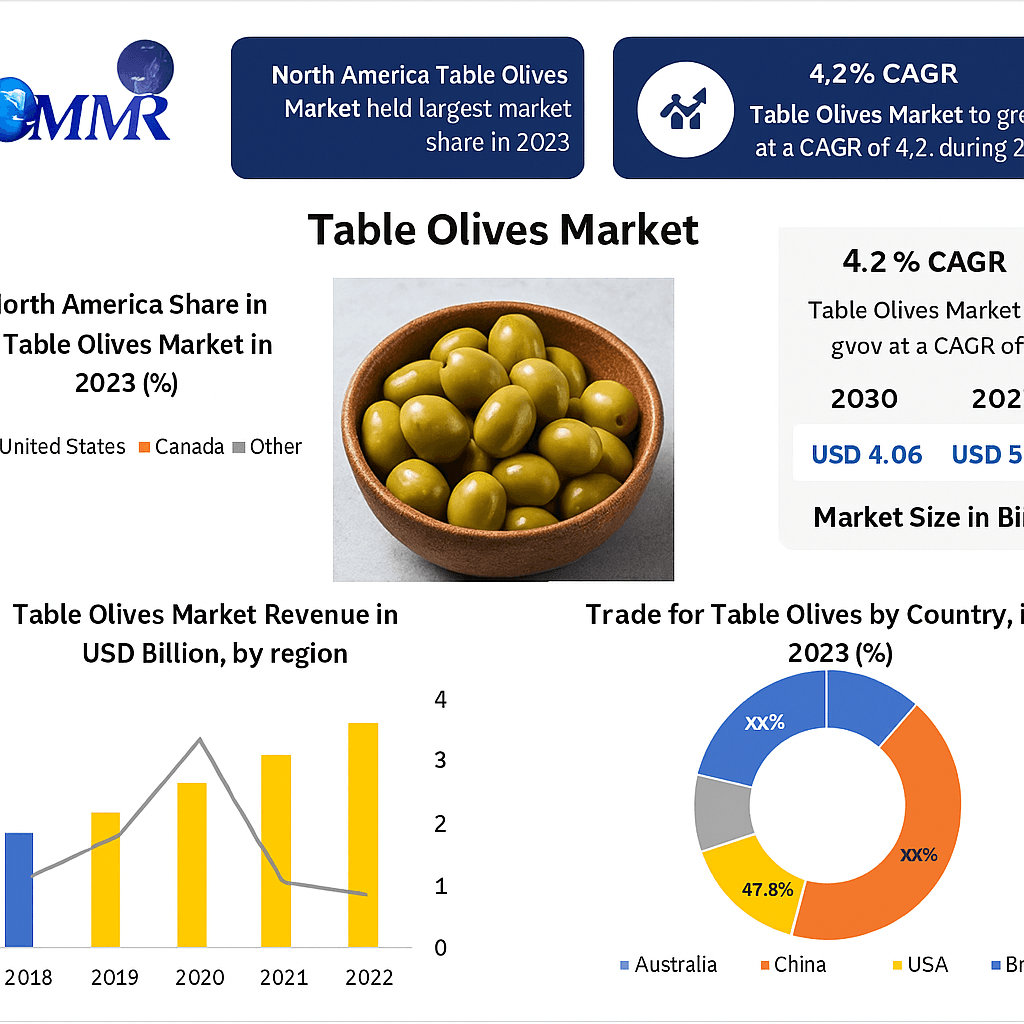
The global table olives market size is projected to experience significant growth, reaching USD 5.42 billion by 2030, up from USD 4.06 billion in 2023. This reflects a compound annual growth rate (CAGR) of 4.2% over the forecast period. Rising consumer interest in healthy eating, the popularity of Mediterranean cuisine, and product innovation are key contributors to this upward trend.
Market Estimation & Definition
Table olives are a processed agricultural product derived from olive fruits specifically prepared for direct consumption, rather than for oil extraction. These olives undergo treatments such as brining, lye curing, and dry curing to eliminate bitterness and improve palatability. Available in a variety of styles, including whole, pitted, stuffed, and sliced, table olives are valued not only for their flavor but also for their nutritional profile—rich in healthy fats, antioxidants, and dietary fiber.
The table olives market is bolstered by the increasing preference for plant-based and minimally processed food products, as well as the inclusion of olives in various cuisines across the globe. With both green and black olives being consumed in substantial quantities, they are a popular ingredient in salads, pizzas, appetizers, and other culinary creations.
Market Growth Drivers & Opportunities
1. Rising Health Consciousness
As awareness grows regarding lifestyle diseases such as cardiovascular conditions and obesity, consumers are adopting diets that promote heart health. Table olives are a rich source of monounsaturated fats, particularly oleic acid, which has been linked to cardiovascular benefits. This has made them a preferred snack and cooking ingredient among health-conscious consumers.
2. Mediterranean Diet Adoption
The Mediterranean diet, known for its emphasis on fruits, vegetables, whole grains, olive oil, and moderate wine consumption, has gained widespread popularity. Table olives are a staple in this diet, further boosting their global demand.
3. Expansion of Retail and E-commerce Channels
The increased penetration of organized retail outlets, such as supermarkets and hypermarkets, coupled with the rapid growth of e-commerce, has significantly enhanced product visibility and availability. This has made table olives more accessible to consumers across both urban and rural markets.
4. Product Innovation and Diversification
Manufacturers are continuously developing new olive-based products, introducing flavored, stuffed, and organic options to cater to evolving consumer preferences. These innovations, including resealable packaging and single-serve portions, also appeal to modern consumers seeking convenience and quality.
5. Urbanization and Changing Lifestyles
Urban living and busy lifestyles have led to increased consumption of ready-to-eat and snackable foods. Table olives, being versatile and easy to incorporate into meals, align well with this shift in consumption patterns.
Segmentation Analysis
The table olives market is segmented across four primary dimensions:
By Price
Premium: Targeting gourmet and health-focused consumers.
Standard: Widely consumed by the mass market, often found in bulk or regular grocery selections.
By Type
Treated Olives: Processed to remove bitterness using chemical or fermentation methods.
Natural Olives: Fermented naturally with minimal processing.
Dehydrated or Shrivelled Olives: Often sun-dried, providing a unique flavor profile.
Olives Darkened by Oxidation: Usually canned and commonly seen in markets.
Specialties and Others: Includes stuffed olives (e.g., with pimentos, almonds, garlic), seasoned varieties, and region-specific innovations.
By Distribution Channel
Supermarkets/Hypermarkets: Major point of sale due to product variety and convenience.
Convenience Stores: Ideal for impulse purchases and ready-to-eat packaging.
E-commerce: Gaining traction due to digital transformation and pandemic-era buying habits.
Specialty Stores: Cater to gourmet and organic product seekers.
Others: Includes direct sales, food service outlets, and local markets.
By Geography
The market is spread across key global regions including:
North America
Europe
Asia Pacific
South America
Middle East & Africa
Each region contributes to market expansion through unique consumption patterns and local preferences.
Country-Level Analysis
United States
The U.S. market for table olives is expanding rapidly due to a growing preference for plant-based diets and Mediterranean cuisine. Olive consumption is supported by a rise in ethnic food adoption and the increasing availability of imported varieties. The U.S. also hosts domestic production in states like California, which supports supply chain resilience and product freshness. Enhanced marketing efforts and innovations in packaging have also contributed to the product’s growing popularity across mainstream American households.
Germany
Germany is one of Europe’s leading importers of table olives, relying heavily on countries like Spain, Greece, and Italy for supply. The German consumer market is known for prioritizing quality, traceability, and environmental sustainability. Demand is rising for organic and fair-trade olives as awareness grows regarding health and environmental impacts. Table olives are widely used in both home cooking and foodservice applications, from antipasto platters to gourmet sandwiches and salads.
Competitor Analysis
The table olives market features a mix of global players and regional specialists. Competition is driven by product quality, pricing strategies, branding, and distribution efficiency. Key players in the industry include:
Deoleo: A leading name in the olive industry, known for its strong international presence and diversified product range.
Agro Sevilla: A prominent Spanish cooperative excelling in both production and export of table olives.
Bell-Carter Foods: One of the largest U.S. producers of table olives, focusing on innovation and sustainability.
California Olive Ranch: Renowned for high-quality, sustainable olive products tailored to the U.S. market.
Pompeian, Inc.: Offers a broad spectrum of olive-based products with a strong heritage appeal.
These companies compete by offering new flavors, organic and preservative-free options, and sustainable farming practices. Strategic alliances, mergers, and acquisitions are common in this space as players strive to expand their market reach.
To view Full Report : https://www.maximizemarketresearch.com/market-report/table-olives-market/189443/
The global table olives market is entering a period of dynamic transformation and expansion. Driven by shifting consumer preferences toward healthier and more convenient food options, the industry is leveraging innovation and market expansion strategies to cater to both developed and emerging economies.
As key countries like the United States and Germany continue to demonstrate robust demand, and with ongoing investments in product development and distribution networks, the table olives market is well-positioned for sustained growth. Companies that can deliver premium quality, sustainable sourcing, and culinary versatility will be the leaders in this evolving and increasingly competitive space.

