
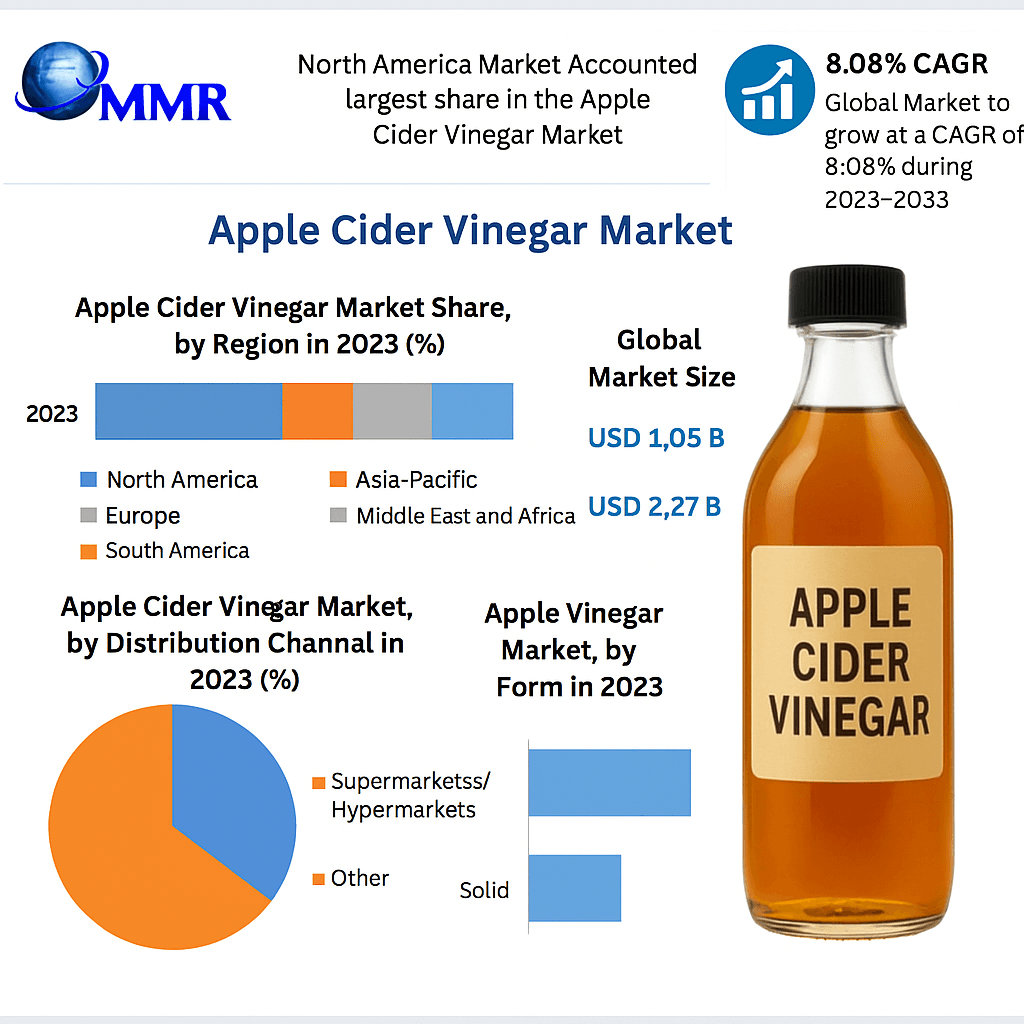
The global apple cider vinegar (ACV) market size is on track to expand from USD 1.045 billion in 2023 to an impressive USD 2.272 billion by 2033, registering a robust compound annual growth rate (CAGR) of 8.08%. This growth is attributed to the increasing consumer inclination toward natural health remedies, rising demand for organic wellness products, and innovative product developments across various forms and distribution channels.
Market Estimation & Definition
Apple cider vinegar is a type of vinegar made through the fermentation of apple juice, resulting in a liquid high in acetic acid, enzymes, and probiotics. Traditionally used in cooking and food preservation, ACV has recently surged in popularity due to its wide range of perceived health benefits. These include supporting weight loss, enhancing digestion, regulating blood sugar, and improving skin health. The market includes various product forms such as liquids, capsules, gummies, and powders, appealing to both traditional and modern health-focused consumers.
Market Growth Drivers & Opportunities
Health and Wellness Awareness
As lifestyle-related conditions like obesity, diabetes, and gut disorders rise globally, more consumers are seeking natural, preventive solutions. ACV fits this demand due to its health-enhancing properties and natural origin.
Product Format Innovation
Modern consumers are looking for convenience and taste. As a result, manufacturers are innovating with flavored ACV drinks, gummy supplements, capsules, and ready-to-use formulations that are easier to consume and integrate into daily routines.
Clean Label Movement
Increasing awareness of ingredients and sourcing is driving demand for clean-label, organic, and non-GMO products. Many consumers now seek out ACV products that are unfiltered, raw, and organically produced, providing a significant opportunity for premium branding.
Digital & E-Commerce Growth
The rapid growth of e-commerce and health-focused digital platforms has enabled greater access to diverse ACV products. Online retail allows consumers to browse a variety of formats, brands, and formulations, accelerating purchase decisions.
Diverse Applications Across Industries
ACV is being adopted beyond the kitchen, with applications in the personal care and pharmaceutical industries. It’s found in skincare, haircare, and detox supplements, further expanding its market potential.
Segmentation Analysis
By Product Type
Filtered ACV
Clear, processed vinegar popular in cooking applications for its milder flavor and smooth texture.
Unfiltered ACV (With the “Mother”)
Cloudy in appearance and rich in probiotics, this variant is preferred by health enthusiasts for its perceived greater health benefits.
By Form
Liquid Form
Traditional and widely used, especially in food and beverages.
Capsules/Tablets
Targeted at health supplement consumers who want the benefits of ACV without the taste.
Gummies
A fast-growing format that combines health with taste, targeting younger consumers and those new to supplements.
By Distribution Channel
Supermarkets/Hypermarkets
The dominant retail format, offering a broad range of products and brands under one roof.
Online Stores
Experiencing rapid growth due to convenience, reviews, and direct-to-consumer brand strategies.
Specialty Health Stores
Focused on organic, wellness, and premium ACV products with professional consultations.
By Application
Food & Beverages
Used as a condiment, salad dressing, and flavor enhancer in everyday cooking.
Personal Care
Integrated into skincare products for its antibacterial and pH-balancing properties.
Pharmaceuticals/Nutraceuticals
Consumed for its reported benefits on metabolism, cholesterol, and detoxification.
Country-Level Analysis
United States
The U.S. remains the largest and most mature market for apple cider vinegar, driven by widespread consumer awareness and product availability. High levels of obesity and health concerns have prompted a shift toward natural supplements, with ACV positioned as a key product. The availability of ACV in various formats—from traditional liquids to modern gummies—caters to a broad demographic range.
Germany
Germany leads the European ACV market due to its strong cultural inclination toward herbal and natural remedies. The country also has a well-established organic product market. German consumers tend to prefer unfiltered and organic ACV products and are increasingly using ACV in both culinary and wellness applications.
Competitor Analysis
The apple cider vinegar market features a blend of legacy food companies, health supplement brands, and emerging natural wellness businesses. These companies are focusing on brand differentiation, health claims validation, and product format diversification to stay competitive.
Key Players Include:
Bragg
A pioneer in organic and unfiltered ACV, known for premium quality and a loyal consumer base.
White House Foods
A traditional brand with strong distribution in grocery chains, offering a range of vinegar products.
NOW Foods
Focused on health supplements, NOW Foods offers ACV in capsule form and promotes it for digestion and detox benefits.
Dynamic Health
A wellness-centric brand with a wide ACV product portfolio, including flavored variants and shots.
Carl Kühne KG
A European-based company with a strong heritage in vinegar production and a growing presence in functional health products.
Competition is intensifying with the entry of wellness startups offering ACV-infused drinks, shots, and beauty supplements. These brands often use aggressive social media marketing and influencer partnerships to capture the millennial and Gen Z audience.
to view full report : https://www.maximizemarketresearch.com/market-report/global-apple-cider-vinegar-market/98303/
The apple cider vinegar market is transitioning from a traditional pantry item to a versatile health and wellness staple. With increasing health awareness, demand for natural remedies, and an explosion of new product formats, the global market is set for significant growth in the next decade. As leading brands innovate and expand into untapped regions, the opportunities for investment and expansion are vast. Stakeholders in the food, nutraceutical, and personal care industries are well-positioned to capitalize on the momentum and redefine how ACV fits into everyday consumer lifestyles.