

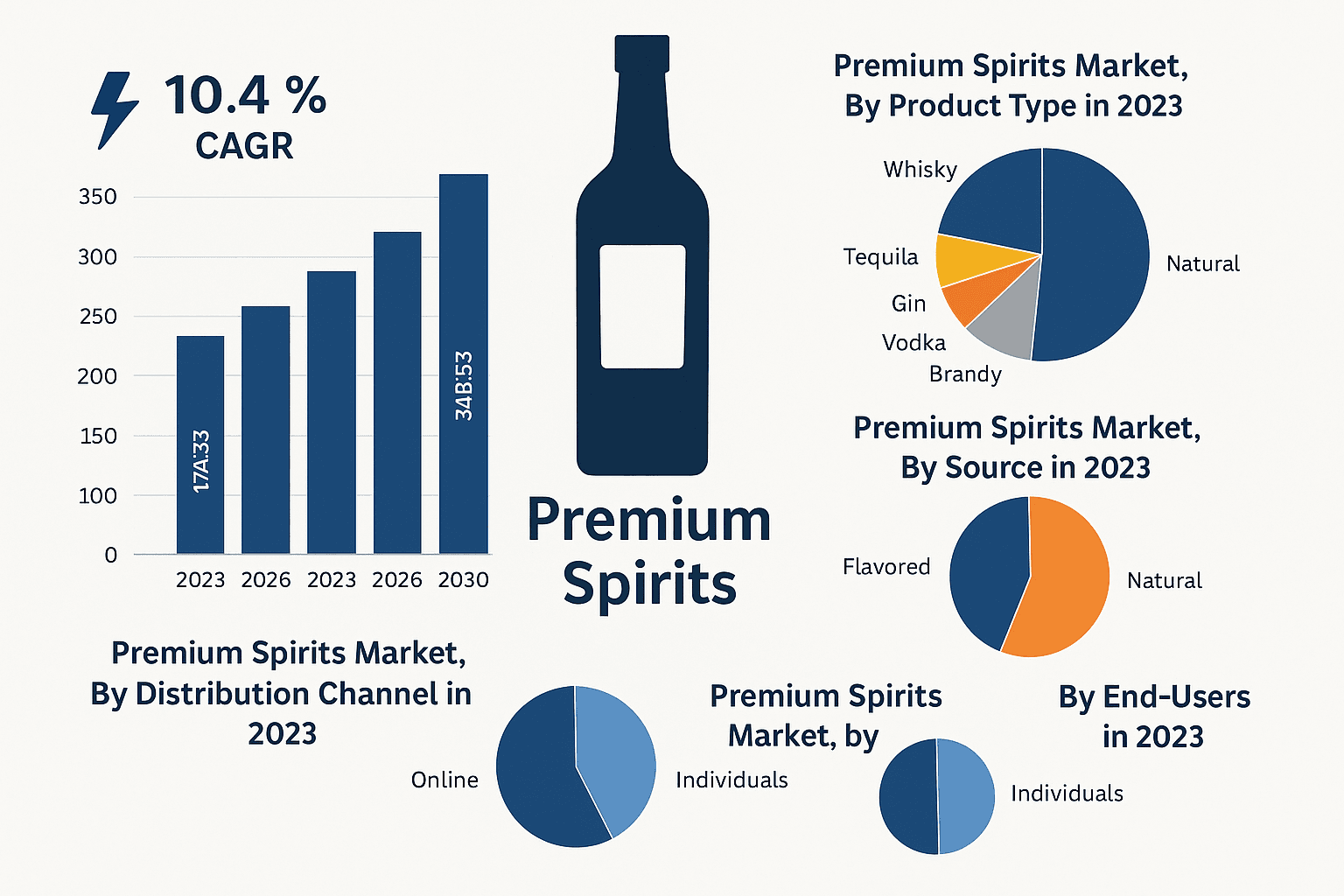
The global premium spirits market size is projected to experience robust growth, increasing from USD 174.36 billion in 2023 to USD 348.53 billion by 2030. This represents a compound annual growth rate (CAGR) of 10.4% over the forecast period, as demand for quality, authenticity, and luxury in alcoholic beverages continues to escalate across global markets.
1. Market Estimation & Definition
Premium spirits refer to high-quality distilled alcoholic beverages that are produced using superior ingredients, careful craftsmanship, and traditional methods. These products stand out due to their distinctive flavors, aged processes, high-end branding, and packaging that appeals to affluent and discerning consumers. The market encompasses a wide range of spirits, including whisky, vodka, tequila, rum, gin, and brandy.
With a global valuation of USD 174.36 billion in 2023, the premium spirits sector is expanding rapidly as consumers shift toward products that offer not only a refined taste experience but also prestige and heritage. The increasing popularity of home consumption and gifting culture has further solidified the relevance of premium spirits in consumer lifestyles.
2. Market Growth Drivers & Opportunities
A. Rising Disposable Incomes
One of the key drivers of this market is the increasing disposable income among consumers, particularly in developing economies. Higher income levels have allowed consumers to explore luxury categories, including high-end alcohol. This trend is especially pronounced among younger consumers in urban regions, who seek lifestyle upgrades and status symbols.
B. The Premiumization Trend
Consumers today are increasingly drawn to high-quality products that reflect exclusivity and authenticity. The trend of premiumization is driving people to shift from mass-market products to luxury spirits, which are often handcrafted or aged over time. This desire for a better drinking experience has opened up substantial opportunities for producers focused on limited editions and artisanal spirits.
C. Innovation in Branding and Packaging
The success of premium spirit brands lies significantly in their ability to tell a compelling story. From heritage narratives to sleek packaging, companies are investing in branding elements that elevate the perception of quality and sophistication. The visual appeal and emotional connect created through branding are pushing consumers to pay more for what they perceive as valuable experiences.
D. Evolving Cocktail Culture
Urban nightlife, social gatherings, and the popularity of cocktails have contributed to the rising demand for versatile and high-quality spirits. Bartenders and mixologists are actively promoting premium spirits as core ingredients in signature cocktails, reinforcing their status and stimulating demand in the hospitality sector.
E. Growth of Online Retail
Online platforms have disrupted traditional distribution models by offering greater convenience, a wider range of products, and access to exclusive labels. Premium spirit brands are now leveraging e-commerce to expand their global reach and offer personalized shopping experiences. Subscription boxes and digital tastings are also helping brands build direct consumer relationships.
3. Segmentation Analysis
By Product Type:
Whisky
Vodka
Tequila
Brandy
Rum
Gin
Others
Whisky remains the dominant category due to its cultural heritage and depth in flavor. However, tequila is showing the fastest growth rate globally as consumers embrace its versatility and regional authenticity.
By Source:
Natural
Flavored
Natural premium spirits appeal to traditionalists and connoisseurs. Meanwhile, flavored spirits are gaining popularity among younger consumers and new entrants looking for approachable, innovative taste experiences.
By Distribution Channel:
Offline (Supermarkets, Specialty Stores, Duty-Free)
Online
While offline stores remain crucial for physical brand presence and experiential buying, the online channel is seeing rapid growth due to ease of access and digital transformation.
By End Users:
Individual Consumers
Commercial Establishments (Bars, Restaurants, Clubs)
Individual consumers represent a substantial portion of market sales, as at-home consumption increases. However, commercial venues continue to play a major role in showcasing premium spirits through curated menus and mixology trends.
4. Country-Level Analysis
United States:
The U.S. is the largest market for premium spirits globally. Driven by a mature consumer base, a strong craft distilling ecosystem, and a culture of experimentation, the U.S. continues to witness high consumption of premium brands. Innovations in whiskey and tequila, in particular, are reshaping consumer preferences.
Germany:
Germany is a key European market with a strong affinity for high-quality alcoholic beverages. The German consumer base values tradition and craftsmanship, leading to increased demand for premium rum, gin, and whisky. The market benefits from a well-established distribution network and a thriving hospitality sector.
Competitive Landscape
The premium spirits market is highly fragmented, with global and regional players competing to capture consumer attention through innovation, storytelling, and strategic expansion.
Key Competitors:
Diageo Plc
Pernod Ricard
Bacardi
Brown-Forman
Tito’s Handmade Vodka
Constellation Brands, Inc.
Campari Group
Tanduay Distillers, Inc.
Allied Blenders and Distillers Pvt. Ltd.
Heineken N.V.
Companies are leveraging sustainability, heritage, and craftsmanship as unique selling points. Strategic acquisitions, limited edition releases, and experiential marketing campaigns are common tactics used to build brand equity in the premium space. The shift toward organic ingredients and eco-friendly packaging is also becoming a point of differentiation.
Conclusion
The premium spirits market is at an inflection point, characterized by increasing consumer demand for quality, authenticity, and exclusivity. The interplay of rising incomes, premiumization trends, cocktail culture, and digital retail expansion is setting the stage for continued growth in the years to come.
Players in the market must continue to innovate while staying true to the heritage and values that define premium spirits. A strong focus on storytelling, sustainability, and customer engagement will be vital to winning loyalty in this evolving, competitive landscape.
With robust market potential and a discerning global consumer base, premium spirits are more than just a trend—they are becoming a staple of modern lifestyle and cultural expression.

