

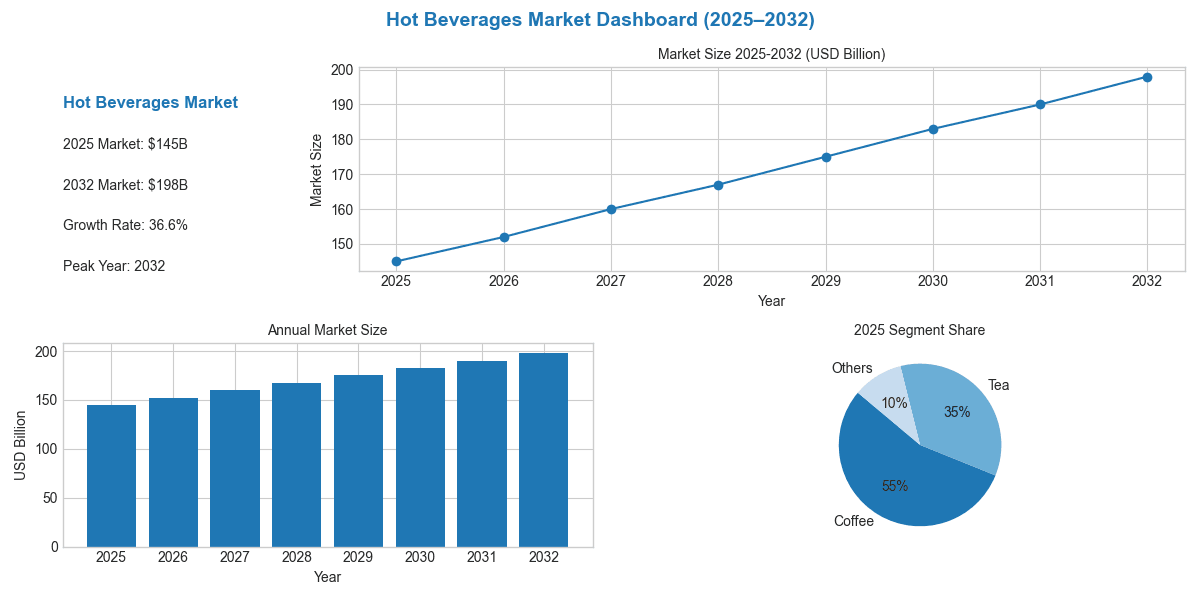
The Global Hot Beverages Market is witnessing steady and sustained growth, projected to rise from USD 136.21 billion in 2023 to USD 188.74 billion by 2030, at a compound annual growth rate (CAGR) of 4.77%. This growth trajectory reflects changes in consumer behavior, demand for convenience, and increased interest in functional and premium beverages.
Global Hot Beverages Market Estimation & Definition
The hot beverages market encompasses a variety of consumables typically served warm, including coffee, tea, hot chocolate, and wellness-infused drinks. These beverages are integral to daily routines, offering comfort, energy, and health benefits.
As of 2023, the market was valued at USD 136.21 billion, driven by both volume sales and a growing premium segment. The forecast suggests the market will reach USD 188.74 billion by 2030, driven by innovations in formulation, packaging, and delivery, as well as rising global consumption in both household and commercial settings.
Global Hot Beverages Market Growth Drivers & Opportunities
Changing Lifestyles and Consumption Habits
Busy lifestyles and the global shift to hybrid and remote working models have amplified demand for convenient beverage formats such as instant mixes, single-serve pods, and ready-to-drink hot beverages.
Health & Wellness Trends
Consumers are increasingly opting for drinks that contribute to wellness goals. Green teas, herbal infusions, matcha, turmeric lattes, and functional drinks offering immunity, relaxation, or energy-boosting properties are on the rise.
Premiumization
There is a strong demand for high-quality coffee and tea offerings, such as single-origin beans, organic leaves, and craft brews. Consumers are willing to spend more on artisanal and ethically sourced beverages, contributing to the market’s value growth.
Digital Penetration & E-commerce
The rapid growth of online shopping and beverage subscription services has made it easier for consumers to access niche and international products. Brands are leveraging digital platforms to offer customization and direct-to-consumer experiences.
Sustainability and Innovation
Companies are responding to environmental concerns with eco-friendly packaging, ethically sourced ingredients, and carbon-conscious operations. These efforts resonate with environmentally aware consumers and offer a competitive edge.
Opportunities exist in:
Expanding product lines to include functional or plant-based hot beverages
Introducing sustainable and innovative packaging
Localizing flavors to cater to regional taste profiles
Building digital-first customer engagement and subscription models
Global Hot Beverages Market Segmentation Analysis
The hot beverages market is segmented based on Type, Application, and Region.
Global Hot Beverages Market By Type
Coffee: Remains the leading product type, favored for its stimulating effects, convenience, and flavor. Instant coffee, espresso pods, and specialty brews continue to gain popularity.
Tea: Includes a wide range of offerings such as black, green, oolong, herbal, and fruit-infused teas. Health-conscious consumers are driving demand for teas with antioxidant and anti-inflammatory properties.
Others: Encompasses hot chocolate, malt-based drinks, and novel wellness drinks (e.g., mushroom tea, turmeric lattes).
By Application
Household: Dominates the market, particularly due to daily consumption habits. Innovations in home brewing and single-serve systems have transformed home beverage consumption.
Commercial: Includes hotels, cafés, restaurants, and corporate offices. This segment is characterized by bulk purchases, high-frequency orders, and a growing preference for premium quality products.
By Region
North America: High per-capita coffee consumption and widespread café culture. Premiumization and single-serve technologies dominate.
Europe: Strong tradition of tea consumption alongside a growing specialty coffee culture. Consumers seek organic and functional options.
Asia-Pacific: Tea remains a staple beverage. Urbanization, rising incomes, and western influences are boosting coffee demand.
Rest of the World: Emerging economies show growing interest in global beverage trends, especially among the urban youth.
Country-Level Analysis
United States
The U.S. remains one of the largest and most influential markets for hot beverages. Coffee leads consumption, with a trend toward cold brews, nitro coffee, and functional mushroom-based options. Tea, particularly herbal and green variants, is gaining traction among wellness-focused consumers.
Convenience is a driving force in the American market, with high adoption of single-serve brewing machines and an increasing preference for portable packaging. Additionally, cafés and chains continue to expand their menus to include niche teas, international flavors, and functional hot drinks.
Germany
Germany exhibits a strong tea culture, particularly black and herbal teas. Consumers are inclined toward health-conscious purchases, leading to increased sales of green, chamomile, and rooibos teas. On the coffee front, espresso and filtered coffee maintain popularity, with premium blends and fair-trade certifications gaining significance.
Germany also has a growing organic segment, and consumers are increasingly interested in sustainable sourcing and eco-conscious packaging. The commercial sector, including office coffee solutions and vending, is also a significant contributor to market volume.
Get Full Report : https://www.maximizemarketresearch.com/market-report/global-hot-beverages-market/94787/
Global Hot Beverages Market Competitor Analysis
The global hot beverages market is moderately consolidated, with a mix of established players, premium boutique brands, and private labels vying for consumer attention.
Global Hot Beverages Market Key Players
Global Giants: Companies like Nestlé, Starbucks, JDE Peet’s, and Unilever hold significant market share through broad product portfolios and extensive distribution networks. They frequently innovate in both product formulations and packaging technologies.
Boutique & Craft Brands: Independent roasters, specialty tea brands, and wellness-driven startups offer highly curated, artisanal experiences. These brands attract younger and more health-conscious consumers.
Private Labels: Supermarkets and retail chains are increasing their presence with competitively priced private-label hot beverages. This segment appeals to cost-conscious consumers and often mimics popular flavors and formats.
Global Hot Beverages Market Competitive Strengths
Large players benefit from scale, brand loyalty, and global reach.
Niche brands differentiate through storytelling, origin, and sustainable sourcing.
Private labels leverage pricing advantage and direct retail shelf presence.
To remain competitive, companies are increasingly investing in product innovation, sustainable practices, and direct-to-consumer strategies.
Global Hot Beverages Market Press Release Conclusion
The Global Hot Beverages Market is experiencing a transformation driven by consumer demand for quality, wellness, and convenience. With projections placing the market at USD 188.74 billion by 2030, the industry shows strong potential across segments and regions.
The U.S. continues to lead in coffee consumption, with evolving trends in functional and specialty products. Germany remains a key tea market with an appetite for organic and health-driven offerings. Meanwhile, emerging economies offer fertile ground for brand expansion and localization.
From premiumization and sustainability to digital-first consumer experiences, the hot beverages sector is dynamic and evolving. Industry players that focus on innovation, consumer engagement, and ethical practices will be well-positioned to capture market share and fuel future growth.
To View More Report :https://fmcgpresswire.com/gourmet-salt-market-dynamics/

