

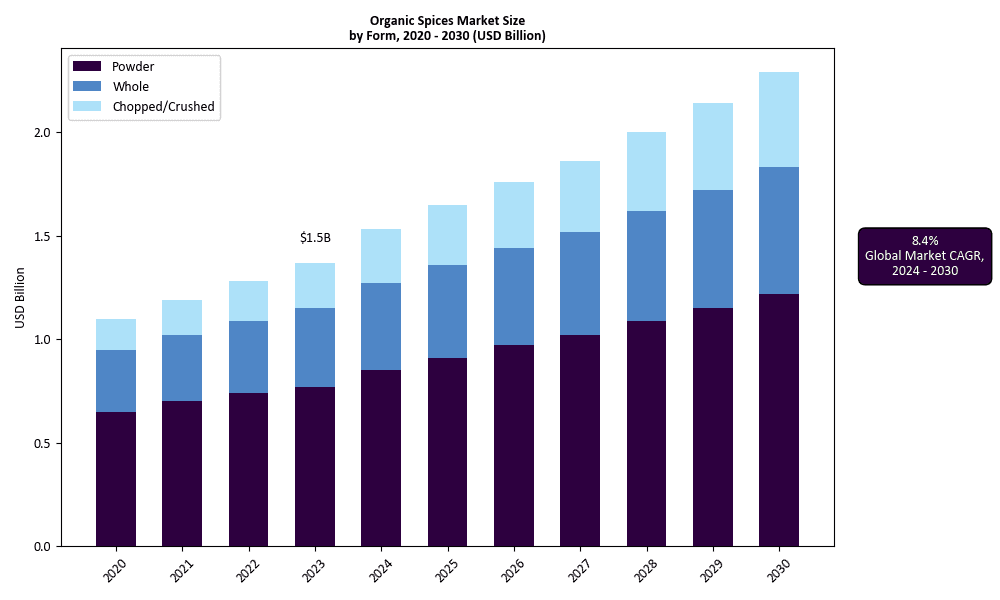
The global organic spice market is poised for substantial growth, projected to expand from USD 44.09 billion in 2024 to USD 84.07 billion by 2032, at a CAGR of 8.4%. The surge is attributed to shifting consumer preferences toward chemical-free, health-boosting food products and expanding demand for clean-label, sustainable ingredients worldwide.
Global Organic Spice Market Estimation & Definition
The organic spice market comprises naturally grown spices produced without the use of synthetic fertilizers, pesticides, or genetically modified organisms (GMOs). These spices retain their nutritional integrity, aromatic properties, and medicinal benefits while aligning with global standards for organic certification.
Key products in the market include:
Organic Ginger
Organic Turmeric
Clove
Pepper (black, white, green)
Cinnamon (Ceylon and Cassia)
Nutmeg
Mustard Seeds (Yellow and Brown)
Other Spices such as cardamom, cumin, and coriander
Organic spices are offered in a variety of forms such as whole, raw, powdered, and seed form, catering to both commercial and household segments. With rising demand across the food, beverage, nutraceutical, and cosmetics industries, the global market for organic spices has transformed from niche to mainstream, experiencing rapid expansion in developing and developed economies alike.
Global Organic Spice Market Growth Drivers & Opportunity
Several macroeconomic and social factors are propelling the growth of the organic spice market:
Health-Conscious Consumer Behavior
As consumers become more aware of the health risks associated with synthetic additives and pesticides, there has been a dramatic shift toward organically sourced ingredients. Spices like turmeric and ginger, known for their anti-inflammatory and immunity-boosting properties, are gaining massive popularity in everyday diets.
Demand for Clean-Label Products
Food manufacturers are increasingly prioritizing clean-label products with minimal ingredients and transparent sourcing. Organic spices meet this requirement while also enhancing flavor and nutritional value without compromising health.
Rise in E-commerce and Online Grocery Sales
Digital platforms have played a transformative role in the accessibility and visibility of organic spice products. Online shopping portals offer consumers a wider variety of certified organic spices, enabling convenience, product comparisons, and fast delivery.
Sustainable and Ethical Sourcing Trends
Environmental concerns are prompting both consumers and manufacturers to adopt sustainable agricultural practices. Organic farming, by eliminating harmful inputs, aligns with eco-friendly practices and supports biodiversity.
Innovation in Blended Spices and Ready-to-Use Mixes
The development of organic spice blends, rubs, and ready-to-cook seasoning mixes is creating new business opportunities. These value-added products cater to busy lifestyles and global taste exploration.
Global Organic Spice Market Segmentation Analysis
The report segments the global organic spice market into the following categories:
By Product Type
Organic Ginger
Organic Turmeric
Clove
Pepper
Cinnamon
Nutmeg
Mustard Seeds
Others
By Form
Whole
Raw
Powder
Seeds
Other Forms
By Application
Commercial
Household
By Distribution Channel
Supermarkets/Hypermarkets
Convenience Stores
Online Sales
Other Channels
This segmentation enables market participants to tailor strategies by category, ensuring optimized production, packaging, pricing, and promotion. For example, household users may prefer powdered turmeric or spice mixes, whereas commercial buyers seek bulk whole spices for processing or culinary use.
Global Organic Spice Market Country-Level Analysis: USA & Germany
United States
The U.S. represents one of the largest and most influential markets for organic spices globally. A strong organic food culture, robust retail infrastructure, and a highly informed consumer base support the market’s rapid expansion. Organic certification systems such as USDA Organic further reinforce trust and transparency among consumers.
Retailers have adopted diverse strategies to promote organic spices, including private labels, organic-only grocery aisles, and subscription models through online platforms. Moreover, dietary trends such as paleo, vegan, and plant-based living continue to favor the inclusion of organic herbs and spices.
Germany
Germany is a major European hub for organic consumption. With a reputation for strict food regulations and high consumer expectations for quality and sustainability, Germany’s organic spice market is both mature and growing.
Retail chains, health food stores, and local co-ops have embraced organic spices as part of their regular offerings. Additionally, Germany’s culinary culture supports the use of authentic, natural ingredients, making organic spices a preferred choice for both households and restaurants.
Global Organic Spice Market Commutator (Competitive) Analysis
The global organic spice market is highly competitive, comprising a blend of multinational corporations, regional producers, and artisanal brands. Key players are focusing on product diversification, certification compliance, packaging innovation, and direct-to-consumer marketing strategies.
Key Players:
1. Yogi Botanicals Pvt. Ltd (India)
2. Live Organics (India)
3. Starwest Botanicals (U.S.)
4. Salzhäusl Himalaya-Kristall salz GmbH (Germany)
5. Rocky Mountain Company (Canada)
6. Rapid Organic Pvt. Ltd. (India)
7. Organic Spices Inc. (U.S.)
8. Earthen Delight (India)
9. The Spice Hunter (U.S.)
10. Frontier Natural Products Corporation (U.S.)
Global Organic Spice Market Competitive Strategies:
Mergers & Acquisitions: Larger food companies are acquiring niche organic spice producers to expand product portfolios and enter new markets.
Product Innovation: Companies are launching new lines of organic spice pastes, blends, and culinary kits.
Sustainability Branding: Ethical sourcing, biodegradable packaging, and carbon-neutral operations are being used to attract eco-conscious consumers.
Digital Transformation: Brands are leveraging e-commerce platforms, personalized advertising, and influencer marketing to build brand loyalty.
This dynamic competitive environment ensures continued product quality improvements, pricing innovation, and consumer engagement.
Read Full Report: https://www.maximizemarketresearch.com/market-report/organic-spice-market/146062/
Global Organic Spice Market Press Release Conclusion
The organic spice market is undergoing a transformative phase, evolving from a wellness trend into a core component of global food and health culture. As consumers become more mindful of their dietary choices and environmental impact, the demand for clean-label, sustainably sourced spices is set to accelerate.
With a projected market value exceeding USD 84 billion by 2032, the opportunity is vast for businesses across the supply chain—from farmers and processors to retailers and digital distributors. Market players who prioritize transparency, quality, sustainability, and innovation will be well-positioned to capitalize on this growth.
This momentum is not just a shift in consumer preference but a paradigm change in how the world views food, health, and sustainability.
To View Full Report On Starch Derivatives: https://fmcgpresswire.com/starch-derivatives-market-to-hit-usd-103-57-billion/

