
Market Overview
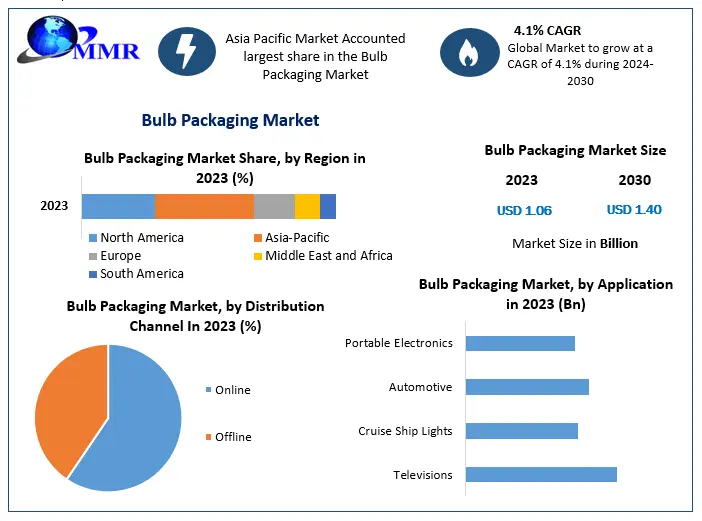
The global Bulb Packaging Market is projected to reach USD 1.40 billion by 2030, growing at a CAGR of 4.1% during the forecast period. The market expansion is driven by the increasing demand for protective, eco-friendly, and cost-efficient packaging solutions, particularly with the growing adoption of LED lighting products worldwide.
Bulb packaging plays a critical role in safeguarding fragile lighting products during storage, transportation, and retail display. As lighting technologies evolve, packaging solutions are also transforming to meet sustainability goals and e-commerce requirements.
Impact of COVID-19 on the Market
The COVID-19 pandemic had a mixed impact on the bulb packaging industry. While temporary lockdowns disrupted manufacturing and supply chains, demand rebounded due to:
- Increased online purchases of lighting products
- Growth in home improvement activities
- Rising need for secure and durable packaging
The recovery trajectory varied across regions depending on the severity and duration of lockdowns. The pandemic also accelerated the shift toward sustainable and e-commerce-friendly packaging solutions.
To know about the Research Methodology :https://www.maximizemarketresearch.com/request-sample/26075/
Market Dynamics
Key Growth Drivers
- Rising Demand for Eco-Friendly Packaging
Sustainability is becoming a central focus in packaging innovation. Eco-friendly materials such as biodegradable plastics, recycled paperboard, and molded pulp are gaining traction due to:
- Increasing environmental awareness
- Government regulations on plastic usage
- Corporate sustainability initiatives
This trend is expected to significantly boost demand for green packaging solutions.
- Growth of LED Lighting Market
The rapid adoption of LED bulbs is a major driver for packaging demand. LED lighting offers:
- Higher energy efficiency
- Longer lifespan
- Lower maintenance costs
As a result, LED bulb packaging is anticipated to dominate the market in the coming years, requiring innovative designs that ensure both protection and aesthetic appeal.
- Expansion of E-commerce
The shift toward online retail has transformed packaging requirements. Bulb packaging must now:
- Withstand long-distance shipping
- Provide enhanced protection against damage
- Include clear product information and branding
E-commerce growth has made packaging more critical than ever, increasing demand for durable and lightweight solutions.
- Functional and Cost-Efficient Packaging
Modern bulb packaging solutions emphasize:
- Portability and ease of handling
- Cost efficiency for manufacturers
- Recyclability and reusability
These features are helping manufacturers balance performance with sustainability, fueling market growth.
Market Challenges
Despite steady growth, the market faces certain challenges:
- High cost of sustainable materials
- Complexity in designing packaging for diverse bulb types
- Pressure to reduce packaging waste
However, ongoing innovation in materials and design is expected to mitigate these challenges over time.
Segment Analysis
By Material Type
The eco-friendly material segment is expected to hold the largest market share due to increasing demand for sustainable packaging solutions. Innovations in biodegradable and recyclable materials are accelerating adoption across industries.
By End-Use
- LED Bulb Packaging (fastest-growing segment)
- CFL Bulb Packaging
- Incandescent Lamp Packaging
The LED segment dominates due to its widespread adoption in residential, commercial, and industrial applications.
By Distribution Channel
- Online
- Offline
Online channels are gaining prominence due to the surge in e-commerce platforms, requiring more robust packaging designs.
By Application
- Televisions
- Automotive lighting
- Portable electronics
- Industrial lighting
- Others
The increasing use of lighting in electronics and automotive sectors further supports packaging demand.
To know about the Research Methodology :https://www.maximizemarketresearch.com/request-sample/26075/
Regional Insights
Asia-Pacific
Asia-Pacific is expected to dominate the global market due to:
- Rapid urbanization and industrialization
- Strong demand for lighting products
- Growing economies such as India and China
North America
North America is projected to witness the highest growth rate, supported by:
- Advanced industrial infrastructure
- High adoption of sustainable packaging
- Mature consumer markets
Europe and Other Regions
Europe continues to emphasize eco-friendly regulations, while emerging regions in Latin America and the Middle East & Africa are gradually adopting modern packaging solutions.
Competitive Landscape
The bulb packaging market is moderately fragmented, with companies focusing on innovation, sustainability, and design efficiency.
Key Players
- FORMA Structural Packaging
- Global Printing & Packaging Co. Pvt. Ltd
- Display4sale
- Blue Spark Design
- Snapper Display
- W&Co
- Shenzhen Shunbaoda Plastic MFG Co., Ltd
- Global Packaging Alliance
- Shenzhen Kaii Packaging Product Co., Ltd
- Green Plastic Products Co. Ltd
These players are focusing on sustainable materials, innovative designs, and strategic collaborations to strengthen their market presence.
Future Outlook
The future of the bulb packaging market will be shaped by:
- Increased adoption of biodegradable materials
- Smart packaging innovations (QR codes, tracking labels)
- Rising demand from e-commerce and electronics sectors
- Government regulations promoting sustainability
As environmental concerns continue to rise, companies that prioritize eco-friendly and innovative packaging solutions are expected to gain a competitive edge.
Conclusion
The global bulb packaging market is evolving steadily, driven by sustainability trends, growing LED adoption, and the rise of e-commerce. While challenges such as material costs and waste reduction persist, innovation and regulatory support are paving the way for long-term growth.
With increasing demand for safe, efficient, and environmentally responsible packaging, the industry is poised to play a vital role in the future of global lighting and consumer goods markets.