
Polyurethane Market to Reach USD 112.35 Billion by 2032 as Sustainable Materials and Construction Demand Reshape Global Industry Landscape
The global Polyurethane Market is entering a phase of consistent industrial expansion, supported by rising demand across construction, automotive, furniture, electronics, coatings, and packaging sectors. Valued at USD 82.17 Billion in 2025, the market is projected to reach nearly USD 112.35 Billion by 2032, advancing at a CAGR of 4.57% during 2026–2032. Polyurethane continues to gain strategic importance as manufacturers seek lightweight, durable, thermally efficient, and cost-effective materials that align with evolving environmental standards and product performance requirements.
Polyurethane is one of the most versatile polymer families used in modern manufacturing. Available in rigid foams, flexible foams, elastomers, coatings, adhesives, and sealants, it serves industries requiring a balance of mechanical strength, insulation capability, chemical resistance, and design flexibility. From thermal insulation in buildings and refrigeration units to seat cushioning in vehicles and mattresses, polyurethane has become a foundational industrial material.
♦ Request a Free Sample Copy or View Report Summary:https://www.maximizemarketresearch.com/request-sample/70607/
Industry Structure Evaluation: Broad Application Base Strengthens Market Stability
The polyurethane industry demonstrates a well-diversified structure, with revenue distributed across raw material suppliers, system houses, processors, component manufacturers, and end-use industries. The market is primarily segmented by raw materials such as MDI, PDI, polyols, and specialty additives, each contributing to formulation customization depending on application requirements.
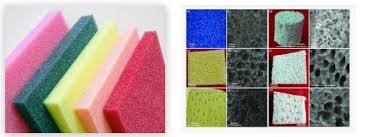
Among product categories, rigid foam and flexible foam collectively command the largest volume share, owing to their massive consumption in insulation systems, bedding, furniture, and automotive interiors. Rigid polyurethane foam remains a preferred material in energy-efficient building envelopes due to its superior thermal resistance and lightweight characteristics, while flexible foam dominates comfort-based applications.
Processing technologies such as injection molding, reaction injection molding (RIM), extrusion, and casting further enhance the market’s industrial depth by enabling manufacturers to produce customized high-performance polyurethane parts for automotive bumpers, electronic housings, appliance components, and industrial rollers.
The market’s structural resilience lies in its ability to serve both commodity applications and premium engineered applications, making it less vulnerable to downturns in any one end-user sector.
Demand Drivers Analysis: Construction Boom and Lightweight Mobility Fuel Consumption
Rising Building and Construction Activities Accelerate Polyurethane Adoption
The strongest growth catalyst for polyurethane remains the expanding global construction industry. Governments and private developers are increasingly investing in energy-efficient residential and commercial infrastructure, which directly supports the demand for polyurethane insulation boards, roofing foams, adhesives, coatings, and sealants.
Polyurethane plays a critical role in reducing building heat transfer, lowering HVAC energy usage, and improving long-term structural durability. As green building certifications and carbon reduction goals become stricter worldwide, polyurethane’s insulation efficiency offers builders a commercially attractive compliance solution.
Rapid urbanization in emerging economies is also increasing the need for affordable housing, industrial parks, smart offices, and logistics centers—all of which utilize polyurethane in multiple structural and finishing applications.
Automotive Industry’s Shift Toward Lightweight Materials Drives Market Expansion
Vehicle manufacturers are increasingly replacing metal and heavier polymers with polyurethane-based solutions to improve fuel economy, passenger comfort, and safety performance. Polyurethane foams are widely used in car seats, headrests, dashboards, acoustic liners, armrests, and thermal insulation panels. Polyurethane elastomers are increasingly deployed in seals, bushings, suspension systems, and wheel applications.
The rise of electric vehicles further strengthens this trend, as automakers prioritize lighter materials to maximize battery efficiency and driving range. Polyurethane’s shock absorption, thermal insulation, and design flexibility make it highly suitable for EV battery insulation systems and noise-dampening components.
Sustainability Transition Encourages Bio-Based Polyurethane Innovation
Another important demand accelerator is the shift toward sustainable polyurethane chemistry. Manufacturers are investing heavily in bio-based polyols derived from soy, castor, corn, and other renewable feedstocks. These formulations reduce dependence on petroleum-based inputs while addressing regulatory and consumer pressure for lower-carbon materials.
At the same time, chemical recycling and mechanical recovery technologies for polyurethane waste are emerging as major innovation areas, enabling circular economy participation and improving long-term market acceptance.
♦ Request a Free Sample Copy or View Report Summary:https://www.maximizemarketresearch.com/request-sample/70607/
Growth Constraint: Environmental Exposure and Regulatory Compliance Remain Key Challenges
Despite strong commercial demand, the polyurethane industry continues to face regulatory scrutiny linked to the use of isocyanates and hazardous chemical intermediates. Occupational exposure during manufacturing can create respiratory and environmental health risks if not properly managed.
Additionally, polyurethane disposal remains a challenge because conventional PU products are not easily biodegradable. Increasing concerns around landfill accumulation, microplastic contamination, and chemical leaching are forcing producers to redesign formulations and adopt recyclable or low-emission alternatives.
These environmental concerns can elevate production costs, slow product approvals, and create compliance burdens, particularly in North America and Europe where environmental legislation is tightening.
Segment-Level Industry Assessment: Construction Segment Holds Dominant Consumption Share
Based on end-user segmentation, the construction industry accounted for the largest share of polyurethane consumption in 2025 and is expected to maintain this lead through the forecast period.
The reason is straightforward: polyurethane delivers a rare combination of thermal insulation, moisture resistance, lightweight performance, and long-term durability. It is extensively used in wall insulation, roof panels, flooring underlays, expansion joints, waterproof coatings, and industrial sealants.
Beyond construction, furniture and interiors represent another major consumption block due to flexible polyurethane foam usage in sofas, office seating, bedding, and cushioning. The automotive segment is emerging as the fastest-growing application area due to increasing lightweight engineering requirements and electric vehicle penetration.
Regional Growth Analysis and Identification: Asia Pacific Leads Global Polyurethane Consumption
The Asia Pacific region dominated the Polyurethane Market in 2025 and is expected to remain the fastest-expanding regional market through 2032.
China and India are witnessing enormous infrastructure spending, residential construction, manufacturing relocation, appliance production, and automobile sales growth—all of which directly increase polyurethane demand. Rapid industrialization and urban housing requirements are generating substantial consumption of insulation foam, adhesives, elastomers, and molded components.
Additionally, the expansion of middle-class consumer spending in Asia Pacific has accelerated purchases of mattresses, footwear, furniture, refrigerators, and automobiles, all of which use polyurethane extensively.
North America remains a technologically advanced market with strong demand from construction retrofitting, automotive innovation, and premium furniture manufacturing. Europe continues to focus on sustainable polyurethane chemistry and low-emission building materials, while the Middle East, Africa, and South America are emerging as infrastructure-led opportunity zones.
♦ Download a free sample of the unmanned composites market report:https://www.maximizemarketresearch.com/market-report/polyurethane-market/70607/
Competitive Positioning Review: Innovation, Sustainability, and Regional Expansion Define Market Competition
The global polyurethane market is highly competitive, with major chemical and polymer manufacturers pursuing three core strategies:
- Capacity expansion in emerging economies
- Bio-based and waterborne polyurethane product innovation
- Application-specific engineered polyurethane systems
Leading producers are strengthening their competitive positions through sustainable product portfolios, local manufacturing hubs, and customized formulations for automotive, insulation, coatings, and industrial uses.
Major companies profiled in the global polyurethane market include:
- The Dow Chemical Company
- Huntsman Corporation
- DuPont de Nemours, Inc.
- Covestro AG
- BASF SE
- Recticel NV/SA
- Wanhua Chemical Group Co., Ltd.
- Mitsui Chemicals, Inc.
- DIC Corporation
- Sekisui Chemical Co., Ltd.
These companies are focusing on higher-performance thermoplastic polyurethane, circular raw materials, low-VOC coatings, and advanced insulation systems to capture premium market share.
◉ Get Market Research Latest Trends
Global Conductive Polymer Market https://www.maximizemarketresearch.com/market-report/global-conductive-polymer-market/31525/
Global 3D Printed Drugs Market https://www.maximizemarketresearch.com/market-report/global-3d-printed-drugs-market/25000/
Global Muscle Stimulator Market https://www.maximizemarketresearch.com/market-report/global-muscle-stimulator-market/54396/
About Maximize Market Research:
Maximize Market Research is a multifaceted market research and consulting company with professionals from several industries. Some of the industries we cover include medical devices, pharmaceutical manufacturers, science and engineering, electronic components, industrial equipment, technology and communication, cars and automobiles, chemical products and substances, general merchandise, beverages, personal care, and automated systems. To mention a few, we provide market-verified industry estimations, technical trend analysis, crucial market research, strategic advice, competition analysis, production and demand analysis, and client impact studies.
Contact Maximize Market Research:
3rd Floor, Navale IT Park, Phase 2
Pune Bangalore Highway, Narhe,
Pune, Maharashtra 411041, India
sales@maximizemarketresearch.com
+91 96071 95908, +91 9607365656