
Hafnium Market Set for Strong Growth Amid Rising Demand from Aerospace, Nuclear Energy, and Semiconductor Industries
The global Hafnium Market is entering a period of accelerated growth as advanced manufacturing industries increasingly rely on high-performance materials capable of withstanding extreme environments. According to recent market analysis, the Hafnium Market was valued at 136.82 metric tons in 2025 and is projected to grow at a CAGR of 7.1% from 2026 to 2032, reaching nearly 221.14 metric tons by 2032.
♦ Request a Free Sample Copy or View Report Summary:https://www.maximizemarketresearch.com/request-sample/107468/
Hafnium Market Overview
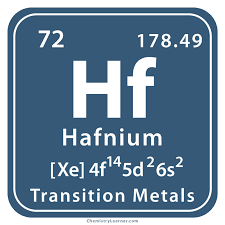
Hafnium is a silvery-grey transition metal known for its remarkable thermal stability, corrosion resistance, and neutron absorption capability. These unique properties make it indispensable across high-temperature aerospace systems, nuclear reactors, advanced electronics, semiconductors, plasma cutting systems, and medical imaging technologies.
The material has become increasingly strategic in industries focused on innovation, efficiency, and safety. Hafnium and its derivatives, including hafnium oxide and hafnium carbide, are gaining traction in superalloys, semiconductor dielectric layers, optical coatings, and nuclear control rods.
The global market remains relatively small in volume but extremely high in value due to limited supply availability. Since hafnium is primarily obtained as a by-product of zirconium refining, supply chain constraints continue to influence pricing and long-term procurement strategies.
Research Methodology and Market Scope
The report evaluates historical data from 2020 to 2025 and provides forecasts from 2026 to 2032. The study analyzes market performance based on:
- Type
- Application
- End-user industry
- Regional outlook
- Competitive landscape
- Technological advancements
- Regulatory developments
The market assessment incorporates industry-wide trends, production capacities, trade flows, technological innovations, and strategic investments across the global hafnium ecosystem.
Rising Aerospace Industry Driving Market Expansion
One of the primary growth drivers for the Hafnium Market is the rapid expansion of the aerospace and defence sector. Hafnium plays a vital role in the production of superalloys used in turbine blades, rocket nozzles, jet engines, and hypersonic systems.
Its ability to retain structural integrity under extremely high temperatures significantly improves engine efficiency, operational safety, and fuel performance. The increasing demand for commercial aircraft, military aviation modernization, and space exploration missions continues to create substantial opportunities for hafnium suppliers.
Private aerospace companies are also accelerating demand. Organizations such as SpaceX, Blue Origin, and Virgin Galactic are investing heavily in next-generation propulsion systems that require advanced heat-resistant materials.
The integration of hafnium-based superalloys into modern aircraft engines is expected to remain a major market catalyst throughout the forecast period.
Medical Imaging and Semiconductor Research Creating New Opportunities
Ongoing innovation in the healthcare and electronics industries is opening new avenues for hafnium applications.
Hafnium is widely used in X-ray tubes for medical imaging systems because of its superior performance under high-temperature conditions. As hospitals and diagnostic centers increase investments in advanced imaging equipment, the demand for hafnium-based components is expected to rise steadily.
In the semiconductor industry, hafnium oxide has become an essential dielectric material for advanced transistor nodes. The push toward miniaturization and higher-performance chips is increasing the adoption of hafnium-based materials in integrated circuits and next-generation processors.
Researchers from Nagoya University and Ming Chi University recently developed a halogen-free atomic-level etching process for hafnium oxide, marking a significant breakthrough in environmentally sustainable semiconductor manufacturing.
Volatile Prices Remain a Key Challenge
Despite strong demand growth, the Hafnium Market faces significant supply-side challenges.
Because hafnium production depends heavily on zirconium mining and refining activities, fluctuations in zirconium demand directly affect hafnium supply volumes. During periods of strong zirconium demand, excess hafnium production can create oversupply conditions and reduce prices. Conversely, lower zirconium production often leads to supply shortages and price spikes.
Additional factors affecting pricing stability include:
- Geopolitical tensions
- Export restrictions
- Trade disputes
- Environmental compliance costs
- Supply chain disruptions
Industry refiners are also implementing advanced wastewater treatment technologies to comply with stricter environmental standards, which may increase operating costs globally.
Hafnium Market Segmentation Analysis
By Type
The market is segmented into:
- Hafnium Metal
- Hafnium Oxide
- Hafnium Carbide
- Others
The hafnium metal segment accounted for the largest share in 2025 due to its widespread use in aerospace engines, nuclear systems, and plasma torches.
Hafnium oxide is emerging rapidly within semiconductor and electronics applications. Its role in enabling smaller and more efficient transistors is becoming increasingly important as chip manufacturers advance toward next-generation computing technologies.
Hafnium carbide is also witnessing rising interest because of its ultra-high melting point and suitability for hypersonic aerospace systems.
♦ Request a Free Sample Copy or View Report Summary:https://www.maximizemarketresearch.com/request-sample/107468/
By Application
The market is segmented into:
- Super Alloys
- Optical Coatings
- Nuclear Control Rods
- Plasma Cutting
- Others
The superalloy segment dominated the market in 2025. Hafnium-containing superalloys are widely used across aerospace turbines, defence systems, and gas turbines because of their superior heat resistance and durability.
Hafnium also plays an important role in plasma cutting applications due to its excellent heat conductivity and high melting point. It enables precision cutting of steel, aluminium, and stainless steel in industrial manufacturing environments.
The nuclear application segment is expected to witness significant growth due to rising investments in nuclear energy infrastructure worldwide.
By End-User Industry
Major end-user industries include:
- Aerospace & Defence
- Nuclear Energy
- Electronics & Semiconductors
- Others
Aerospace and defence remain the largest consumers of hafnium products globally. However, the electronics and semiconductor industry is emerging as one of the fastest-growing segments due to increasing adoption of hafnium oxide in advanced chips.
The nuclear energy sector is also expected to strengthen demand substantially, especially in countries investing in clean energy and energy security initiatives.
Regional Insights
North America Leads the Global Market
North America dominated the Hafnium Market in 2025, supported by strong aerospace manufacturing capabilities and significant investments in defence modernization and nuclear energy.
Major aerospace manufacturers such as Boeing and Lockheed Martin continue to drive demand for advanced hafnium-based alloys used in aircraft engines and defence technologies.
The United States aerospace and defence sector generated approximately USD 959 billion in sales during 2025, highlighting the region’s strong industrial foundation.
Asia Pacific Emerging as High-Growth Region
Asia Pacific is expected to witness the fastest growth during the forecast period. China, Japan, South Korea, and India are investing heavily in semiconductor fabrication, nuclear energy infrastructure, and aerospace manufacturing.
China’s aggressive nuclear reactor expansion plans are expected to generate long-term structural demand for hafnium-containing zirconium alloys.
Europe Maintaining Strategic Position
Europe continues to hold a strong market position due to advanced metallurgy expertise and nuclear technology development. Countries such as France, Germany, and Austria are focusing on high-purity hafnium production for aerospace, electronics, and nuclear applications.
♦ Download a free sample of the unmanned composites market report:https://www.maximizemarketresearch.com/market-report/global-hafnium-market/107468/
Competitive Landscape
The global Hafnium Market is moderately consolidated, with leading companies focusing on vertical integration, OEM partnerships, research and development, and advanced alloy manufacturing.
Key players operating in the market include:
- ATI Inc.
- Framatome
- Materion Corporation
- PLANSEE SE
- Westinghouse Electric Company
- American Elements
- Merck KGaA
- Neo Performance Materials
- Indium Corporation
- Thermo Fisher Scientific
Companies are increasingly investing in recycling technologies, high-purity processing methods, and supply chain localization to secure long-term market competitiveness.
Emerging Trends in the Hafnium Market
Growing Nuclear Energy Investments
The increasing construction of nuclear reactors worldwide is strengthening demand for hafnium used in control rods because of its neutron absorption capability.
Expansion of Aerospace Superalloys
Aircraft manufacturers are integrating advanced hafnium-based superalloys into next-generation propulsion systems to improve thermal performance and fuel efficiency.
Supply Chain Localization and Recycling
Due to limited global supply and export restrictions, countries are prioritizing domestic production capabilities, recycling initiatives, and strategic stockpiling.
Semiconductor Miniaturization
The semiconductor industry’s shift toward smaller transistor nodes continues to increase demand for hafnium oxide in advanced chip manufacturing.
Recent Industry Developments
Several important developments are reshaping the market landscape:
- China General Nuclear Power Group advanced plans for 40 nuclear reactors requiring significant zirconium-hafnium alloy volumes.
- ATI Inc. reported strong growth in hafnium-bearing master alloys for additive manufacturing applications.
- Rolls-Royce integrated hafnium-based superalloys into next-generation aircraft engines.
- Framatome announced expansion plans for high-quality hafnium and zirconium alloy production.
- Semiconductor manufacturers are accelerating adoption of hafnium-based dielectric materials amid growing global chip demand.
Future Outlook
The future of the Hafnium Market appears highly promising as global industries increasingly prioritize high-performance materials capable of supporting aerospace innovation, nuclear expansion, semiconductor miniaturization, and advanced manufacturing technologies.
While supply limitations and price volatility remain major challenges, strategic investments in refining technologies, recycling infrastructure, and domestic production capabilities are expected to strengthen market resilience over the coming decade.
◉ Get Market Research Latest Trends
Data Center Liquid Immersion Cooling Market
About Maximize Market Research:
Maximize Market Research is a multifaceted market research and consulting company with professionals from several industries. Some of the industries we cover include medical devices, pharmaceutical manufacturers, science and engineering, electronic components, industrial equipment, technology and communication, cars and automobiles, chemical products and substances, general merchandise, beverages, personal care, and automated systems. To mention a few, we provide market-verified industry estimations, technical trend analysis, crucial market research, strategic advice, competition analysis, production and demand analysis, and client impact studies.
Contact Maximize Market Research:
3rd Floor, Navale IT Park, Phase 2
Pune Bangalore Highway, Narhe,
Pune, Maharashtra 411041, India
sales@maximizemarketresearch.com
+91 96071 95908, +91 9607365656