

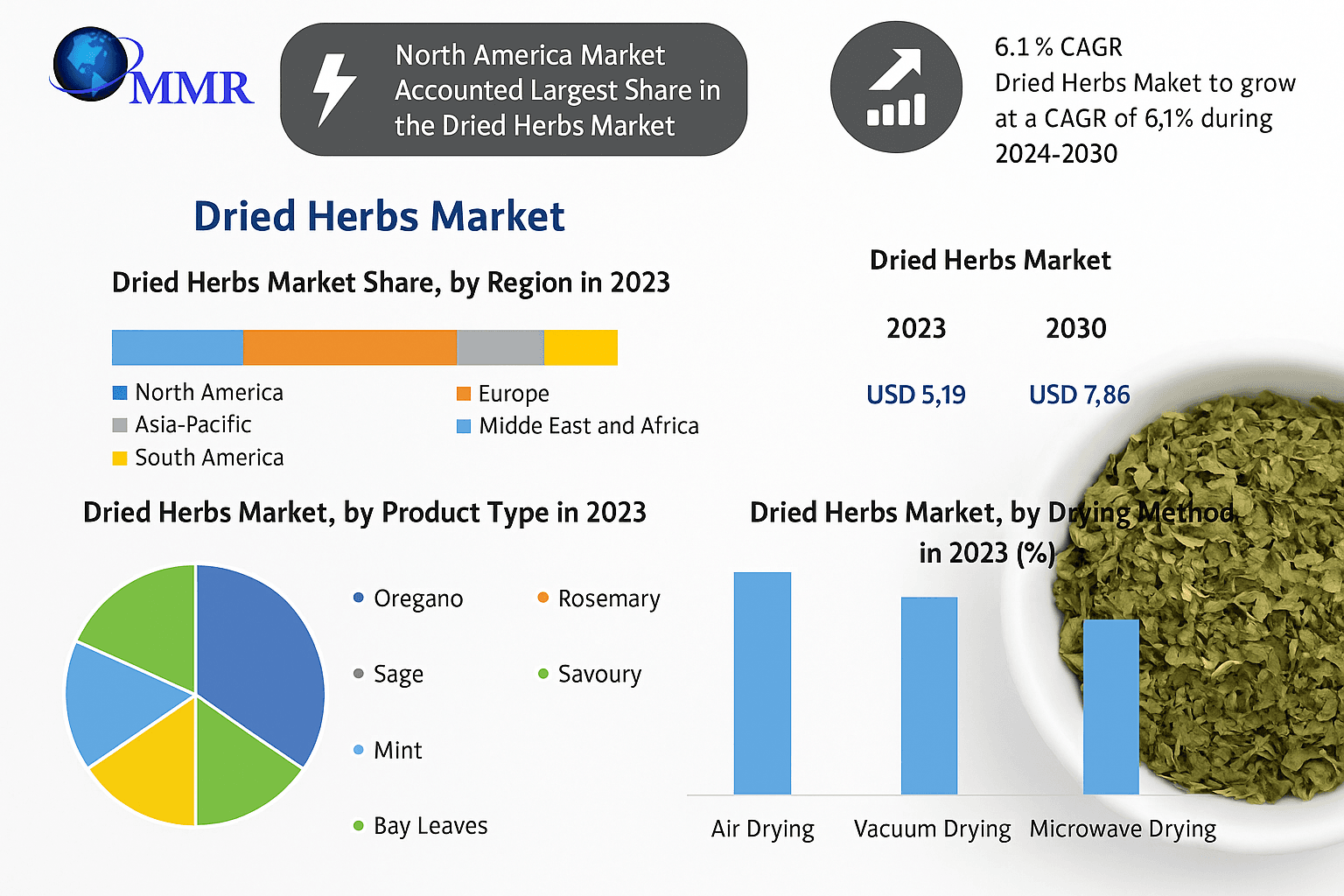
The global dried herbs market continues to show remarkable momentum, supported by growing consumer awareness of natural products and increased demand for processed and ready-to-eat foods.
Market Estimation & Definition
The global dried herbs market size is projected to grow from USD 5.19 billion in 2023 to USD 7.86 billion by 2030, registering a Compound Annual Growth Rate (CAGR) of 6.1% during the forecast period. Dried herbs are moisture-reduced plant products used to enhance flavor and shelf life across a broad spectrum of industries including food processing, pharmaceuticals, and cosmetics. These herbs are preserved via various drying techniques such as air drying, microwave drying, and vacuum drying, making them a reliable and versatile ingredient in numerous applications.
Dried herbs are typically preferred over fresh herbs for their longer shelf life, reduced contamination risk, and enhanced preservation of aromatic and nutritional properties. Their growing adoption across business-to-business (B2B) and business-to-consumer (B2C) channels reflects evolving consumption patterns globally.
Market Growth Drivers & Opportunities
A prominent factor propelling market growth is the global shift towards convenience foods, driven by fast-paced lifestyles and urbanization. Consumers increasingly seek flavorful, nutritious, and easily-prepared food products, making dried herbs a staple in ready-to-eat meals, snacks, and beverages.
Moreover, rising interest in traditional and alternative medicine, such as Ayurveda and Unani practices, is driving the use of dried herbs in pharmaceutical applications. Unlike synthetic compounds, herbs are perceived to have fewer side effects and long-term wellness benefits, fostering their popularity in health-conscious markets.
The growing demand for clean-label and organic products further enhances growth opportunities. As food and beverage manufacturers are pressured to remove artificial additives, the market for natural flavorings like dried herbs has expanded. This trend is particularly prominent among health-focused demographics in North America and Europe.
However, the market faces mild resistance from the availability of fresh herbal alternatives, which are often preferred for their perceived purity and nutritional superiority. Despite this, the affordability, accessibility, and versatility of dried herbs position them favorably for long-term growth.
Segmentation Analysis
The dried herbs market is segmented into five key categories:
By Form: Whole Herbs and Powdered Herbs. Whole herbs dominate the segment with an anticipated 62.5% market share by 2030, driven by cultural and therapeutic preferences for minimally processed botanicals.
By Nature: Organic and Conventional. The organic segment is projected to hold a significant 72% share, as consumers gravitate towards sustainably produced and chemical-free products.
By Product Type: Oregano, Rosemary, Sage, Savoury, Mint, Thyme, and Bay Leaves. Bay Leaves are expected to lead in market share due to their broad culinary applications and high nutritional value, including vitamins A, B6, and C.
By End-User: Business-to-Business (B2B) and Business-to-Consumer (B2C). B2B remains the dominant segment, encompassing food manufacturers, pharmaceutical companies, cosmetics, and personal care sectors.
By Drying Method: Air Drying, Vacuum Drying, and Microwave Drying. Air drying leads the segment for its cost-efficiency and effectiveness, especially for herbs such as sage, oregano, and bay leaves.
Country-Level Analysis
United States
In the United States, demand for dried herbs is bolstered by a growing preference for organic food products and wellness-focused diets. The U.S. is a leading importer of culinary herbs and spices, and dried herbs have found increasing application in gourmet and ethnic cuisines. Additionally, the robust dietary supplement market and rising consumer interest in herbal teas, tinctures, and alternative medicine contribute to sustained growth.
The country also has a mature natural and organic food industry, with well-developed retail infrastructure supporting the widespread availability of dried herb products across health food stores, supermarkets, and e-commerce platforms.
Germany
Germany represents one of the strongest markets for dried herbs in Europe. With a long-standing herbal medicine tradition, German consumers exhibit high trust in plant-based remedies. The country is among the largest importers of bay leaves and other dried herbs, particularly from Eastern Europe and Asia.
The popularity of vegetarian and vegan diets in Germany has accelerated the demand for plant-based flavorings, further supported by government and EU-wide initiatives promoting organic agriculture. Moreover, Germany’s pharmaceutical sector is a key driver of demand for therapeutic-grade dried herbs, aligning with its holistic healthcare values.
Commutator Analysis
The dried herbs market exhibits moderate to high competition, characterized by a mix of global and regional players. Key participants are focusing on strategic alliances, product innovation, and sustainability initiatives to gain a competitive edge.
Companies are increasingly investing in improved drying technologies to preserve herb potency and flavor, which directly affects customer satisfaction and repeat business. Furthermore, sourcing transparency and ethical farming practices are becoming differentiators in a crowded market, as businesses aim to align with ESG (Environmental, Social, and Governance) standards.
Private-label brands are also expanding in the B2C market, leveraging cost advantages and tailored offerings. E-commerce platforms have emerged as vital distribution channels, intensifying competition and promoting brand visibility.
Barriers to entry remain relatively low in regions with abundant herb cultivation, though quality control and regulatory compliance present challenges for new entrants. Nonetheless, the rising demand across pharmaceutical and food industries creates ample room for niche players and specialists in organic or rare herbs.
The global dried herbs market stands at the intersection of health, sustainability, and convenience — key megatrends shaping the future of consumer behavior. With a projected market value of USD 7.86 billion by 2030, the sector is primed for consistent growth driven by innovation, rising global awareness of natural remedies, and expanding culinary diversity.
To View Full Report : https://www.maximizemarketresearch.com/market-report/global-dried-herbs-market/32978/
Countries like the U.S. and Germany exemplify mature yet expanding markets with strong institutional and consumer support for herbal products. Meanwhile, emerging markets in Asia-Pacific, particularly India and China, are fostering growth through their traditional medicine practices and booming organic agriculture sectors.
The next phase of market development will likely be defined by technological advancements in herb drying and processing, strategic global partnerships, and increasing alignment with health and sustainability goals.
As both producers and consumers become more sophisticated, the dried herbs market is set to flourish, offering rich opportunities across the value chain — from farm to flavor.

