

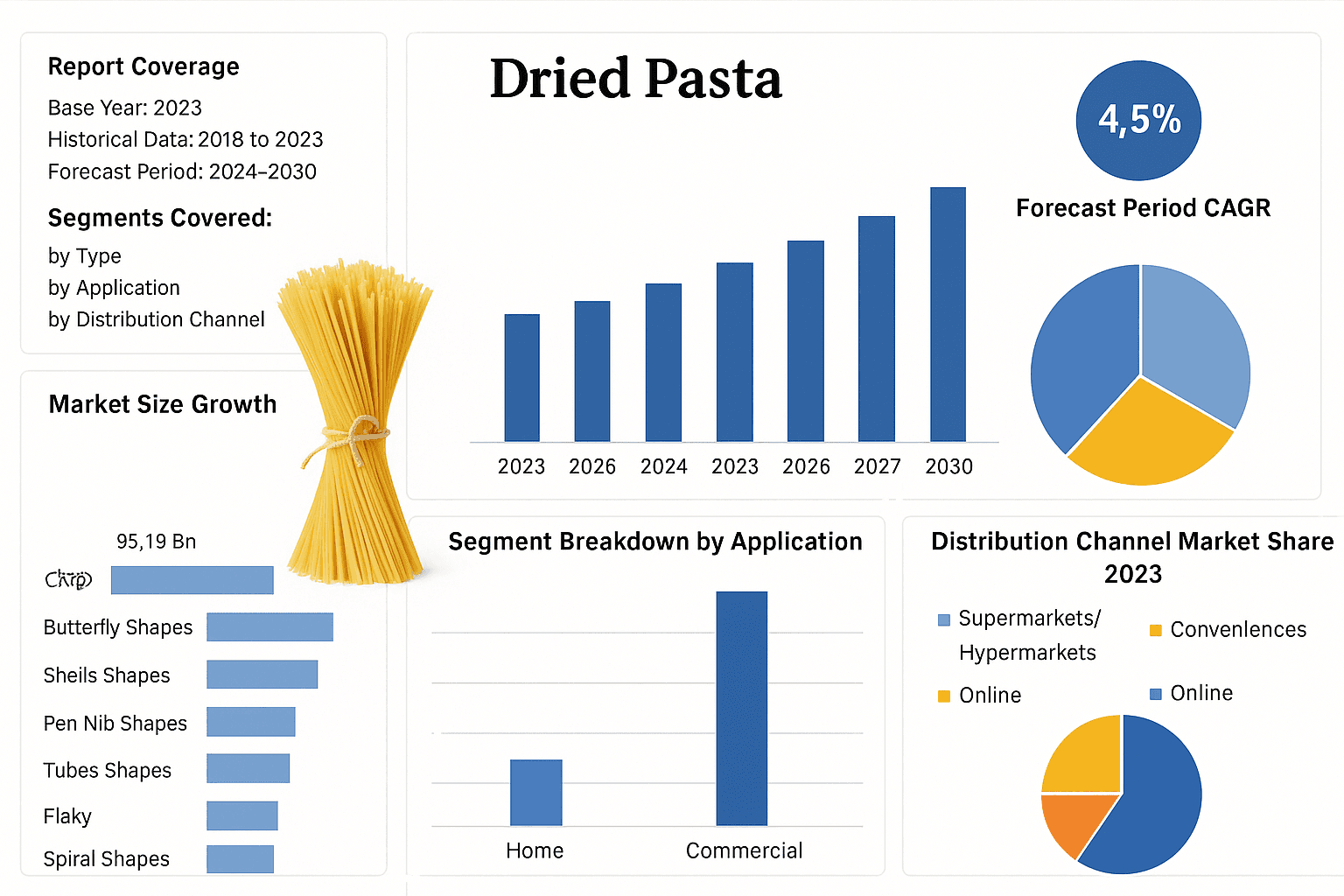
The global dried pasta market size is on a steady upward trajectory, anticipated to grow from USD 51.93 billion in 2023 to USD 70.67 billion by 2030. This expansion reflects a compound annual growth rate (CAGR) of 4.5%, propelled by shifting dietary habits, rising health awareness, and innovative product development in the pasta sector.
Market Estimation & Definition
Dried pasta refers to pasta products made from durum wheat semolina or other types of flour that are mixed with water, shaped, and then dried to ensure long shelf life. Available in a multitude of shapes and sizes such as spaghetti, penne, fusilli, and shells, dried pasta is a globally embraced staple food. It caters to both home cooks and commercial kitchens, prized for its simplicity, affordability, and versatility.
With increasing demand across both developed and emerging markets, the dried pasta market is projected to witness significant growth over the forecast period. In 2023, the market stood at USD 51.93 billion and is expected to reach USD 70.67 billion by 2030, driven by evolving consumer lifestyles, dietary shifts, and innovation in product offerings.
2. Market Growth Drivers & Opportunities
Convenience & Shelf Life
Dried pasta is one of the most convenient food staples globally. It is easy to cook, has a long shelf life, and doesn’t require refrigeration. These factors make it especially attractive to urban consumers seeking quick meal solutions and households in regions with limited access to cold storage.
Health & Wellness Trends
Consumers are increasingly favoring food products that align with healthier lifestyles. Whole grain, high-fiber, and organic pasta options have seen a surge in demand. There is also rising interest in gluten-free pasta made from alternative ingredients like rice, chickpeas, quinoa, and lentils to accommodate dietary restrictions and health needs.
Product Innovation & Flavor Diversification
Food manufacturers are continuously launching new pasta varieties with unique shapes, flavors, and nutrient profiles. These include pasta infused with vegetables, herbs, and functional ingredients such as protein and omega-3s. Such innovations broaden pasta’s appeal to health-conscious consumers and younger demographics seeking novelty in their meals.
Urbanization & Global Influence
As urban populations grow and exposure to global cuisines increases, pasta consumption is expanding beyond traditional Western markets. Pasta dishes have found their way into everyday meals across Asia-Pacific, the Middle East, and Latin America, often customized with local flavors and ingredients.
Expansion of Retail & E-commerce Channels
The increasing availability of pasta products through supermarkets, hypermarkets, and especially online grocery platforms has improved accessibility. Online sales channels have opened opportunities for small and mid-sized brands to reach global consumers more efficiently.
Segmentation Analysis
By Type
Chunky Shapes – Includes larger, dense pasta types suitable for thick sauces.
Butterfly Shapes – Commonly used in light sauces or cold pasta salads.
Shells Shapes – Popular for stuffing or creamy sauces due to their ability to hold fillings.
Pen Nib Shapes – Ideal for baked dishes or hearty sauces.
Tubes Shapes – Classic shapes like rigatoni or cannelloni for rich, meat-based sauces.
Flaky – Thin pasta types that cook quickly and are ideal for broths or light stir-fries.
Spiral Shapes – Known for their ability to trap sauce, widely used in pasta salads and casseroles.
By Application
Home Use – Dried pasta remains a pantry staple in homes worldwide, with increased consumption during busy weekdays and meal prep routines.
Commercial Use – Restaurants, foodservice businesses, and institutional catering rely heavily on pasta for its low cost and versatility.
By Distribution Channel
Supermarkets/Hypermarkets – The most prominent sales channel, offering a wide product variety.
Convenience Stores – Ideal for impulse purchases and quick meal solutions.
Online Platforms – Rapidly growing segment providing convenience, niche products, and subscription-based pasta deliveries.
Country-Level Analysis
United States
The U.S. dried pasta market remains robust, underpinned by the popularity of Italian-American cuisine and growing demand for healthy variants such as high-protein and gluten-free pasta. Rising interest in home cooking, particularly after lifestyle changes during recent years, continues to drive pasta sales across both urban and suburban regions.
Germany
Germany has long had a strong affinity for pasta, with consumers valuing high-quality ingredients and traditional production methods. Increasing demand for organic and wholegrain pasta aligns with Germany’s broader health-conscious food culture. Sustainable packaging and locally sourced ingredients are also becoming strong selling points.
Commutator (Competitive) Analysis
The dried pasta market is characterized by intense competition, innovation, and a blend of international giants and regional specialists. Companies are investing in branding, packaging, and health-based innovation to gain a competitive edge.
Barilla Group – A market leader known for its diverse product line, sustainability focus, and consumer trust. The brand continues to expand globally while offering health-oriented variants like legume-based and gluten-free pasta.
De Cecco – Recognized for its artisanal production process and premium product positioning, appealing to traditionalists and gourmet consumers.
Nestlé (Buitoni brand) – Leverages its global distribution channels to offer high-volume pasta solutions while venturing into the organic and specialty segment.
Campbell Soup Company (Prego brand) – Offers dried pasta along with complementary sauces, creating full-meal solutions for convenience-seeking consumers.
Ebro Foods SA – Focuses on innovation and market expansion, offering a variety of pasta brands under its portfolio that serve different market segments from mass retail to premium.
These companies compete on parameters such as price, health benefits, brand recognition, taste, and packaging. Strategic mergers, acquisitions, and product extensions are frequently used to maintain or grow market share.
For More Detail browse here: https://www.maximizemarketresearch.com/market-report/dried-pasta-market/189736/
The global dried pasta market is set to maintain a stable growth path through 2030. Increasing health awareness, dietary diversity, and lifestyle-driven food habits have created fertile ground for product development and market expansion. As consumers seek convenient yet nutritious food options, dried pasta stands out as a reliable and adaptable staple.
With emerging technologies in food processing and sustainable packaging, manufacturers have numerous opportunities to innovate. Expanding distribution networks, especially digital commerce platforms, further enhance reach and scalability for both established and emerging brands.
Global and regional players alike are poised to benefit from the sector’s dynamism. By aligning products with health trends, flavor innovations, and convenience, companies can meet evolving consumer demands and contribute to the continued evolution of one of the world’s most beloved food staples.

