

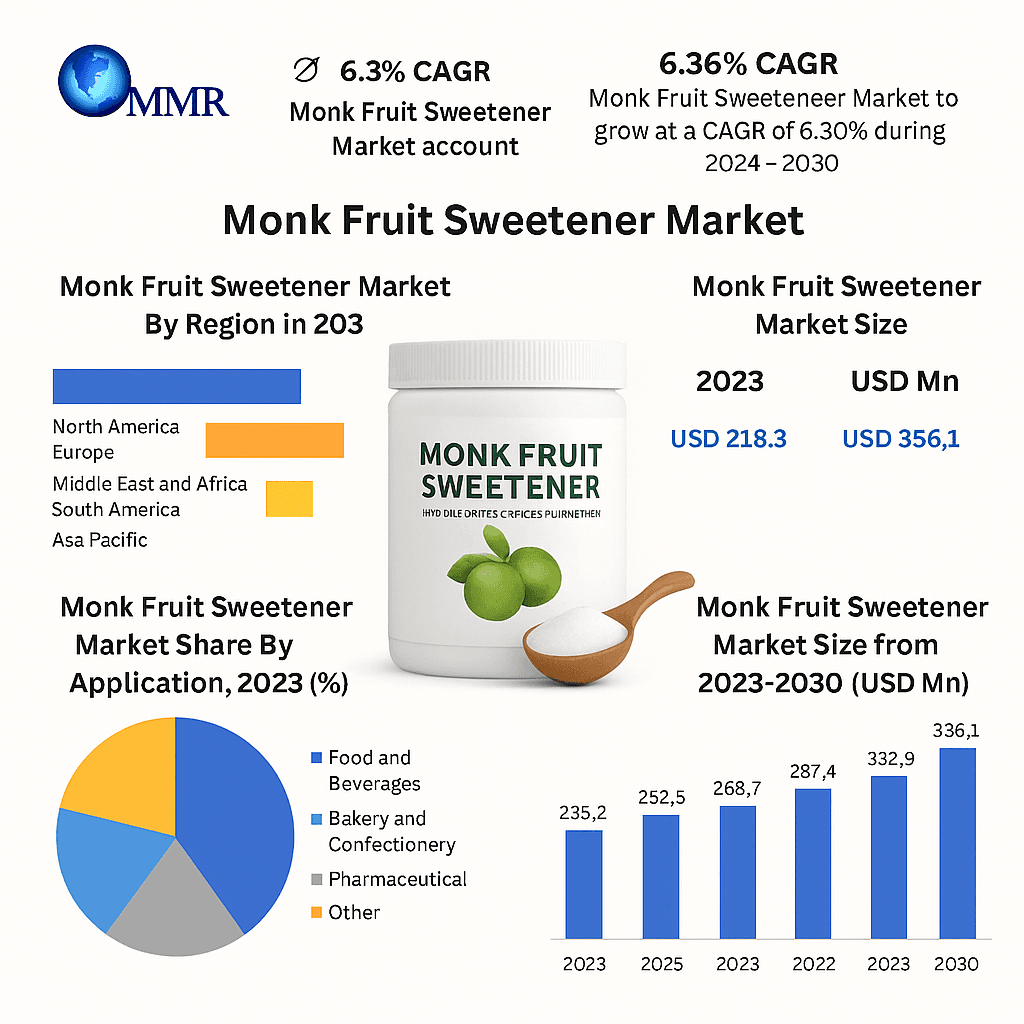
The global monk fruit sweetener market size is projected to grow from USD 218.3 million in 2023 to USD 336.2 million by 2030, exhibiting a Compound Annual Growth Rate (CAGR) of 6.36%. This growth is fueled by increasing consumer demand for natural, zero-calorie sweeteners and a shift towards clean-label products.
Market Estimation & Definition
Monk fruit sweeteners, derived from the mogrosides of the monk fruit, offer a natural, zero-calorie alternative to traditional sugars. Their high-intensity sweetness and low glycemic index make them suitable for individuals seeking healthier dietary options. The market’s valuation at USD 218.3 million in 2023 underscores the rising adoption of these sweeteners in various food and beverage applications.
Market Growth Drivers & Opportunities
The surge in health awareness, particularly concerning obesity and diabetes, has led consumers to seek healthier sugar alternatives. Monk fruit sweeteners cater to this demand by providing sweetness without the associated calories or blood sugar spikes. Additionally, the clean-label movement, emphasizing transparency and natural ingredients, has further propelled the market. Consumers are increasingly scrutinizing product labels, favoring items free from artificial additives and preservatives.
Technological advancements in extraction and processing have enhanced the taste profile of monk fruit sweeteners, making them more palatable and versatile for manufacturers. Furthermore, regulatory approvals in major markets have bolstered consumer confidence and facilitated broader market penetration.
Segmentation Analysis
By Form: The market is segmented into liquid and powder forms. In 2023, the powder form dominated, attributed to its versatility in baking, cooking, and processed foods. Its stability and ease of storage make it a preferred choice for both consumers and manufacturers.
By Category: The market is divided into conventional and organic segments. Conventional monk fruit sweeteners held a significant share in 2023, while the organic segment is anticipated to register the fastest growth, driven by increasing consumer preference for organic products.
By Application: Applications span across food and beverages, pharmaceuticals, and personal care products. The food and beverage sector remains the primary application area, with monk fruit sweeteners being incorporated into various products to cater to health-conscious consumers.
Country-Level Analysis
United States: The U.S. leads in monk fruit sweetener imports, with 928 shipments in 2023, reflecting strong domestic demand. The market’s growth is driven by a well-established food and beverage industry and increasing consumer inclination towards healthier alternatives. Major brands like Coca-Cola and PepsiCo have integrated monk fruit sweeteners into their products to meet this demand.
Germany: While specific import data for Germany is not detailed, the European market, including Germany, is experiencing growth due to regulatory approvals and increasing health awareness. The clean-label trend is gaining traction, with consumers seeking natural and additive-free products, positioning monk fruit sweeteners as a favorable option.
Competitor Analysis
The monk fruit sweetener market is characterized by the presence of both established companies and emerging players. Key players include:
Monk Fruit Corp.: A leading supplier focusing on monk fruit cultivation and processing.
Guilin Layn Natural Ingredients Corp.: Specializes in natural sweeteners and botanical extracts.
Archer Daniels Midland Company (ADM): A global food processing and commodities trading corporation.
Tate & Lyle PLC: Offers a range of sweetening solutions, including monk fruit-based products.
Cargill, Inc.: Provides food, agriculture, financial, and industrial products and services globally.
GLG Life Tech Corp.: Focuses on the production of zero-calorie natural sweeteners.
Steviva Brands, Inc.: Offers natural sweeteners and sugar substitutes.
NOW Foods: A natural products manufacturer with a range of health-focused products.
Firmenich SA: A private Swiss company in the fragrance and flavor business.
SweetLeaf: Known for its natural sweetener products, including those made from stevia and monk fruit.
Lakanto: Offers monk fruit sweeteners and related products, catering to health-conscious consumers.
These companies are investing in research and development to enhance monk fruit extraction processes, making the product more accessible and affordable. They are also leveraging partnerships with major food and beverage brands to integrate monk fruit sweeteners into new formulations. In addition to these dominant players, smaller companies and innovators are gaining market share by offering unique blends and targeting niche markets. This dynamic competitive environment continues to drive advancements in monk fruit sweetener products, making them more attractive to a global consumer base.
To view Full Report :
The monk fruit sweetener market is poised for significant growth, driven by health-conscious consumers and the clean-label movement. With technological advancements, regulatory support, and increasing consumer demand, monk fruit sweeteners are becoming a staple in the global food and beverage industry. As companies continue to innovate and expand their product offerings, the market is expected to witness sustained growth in the coming year

