

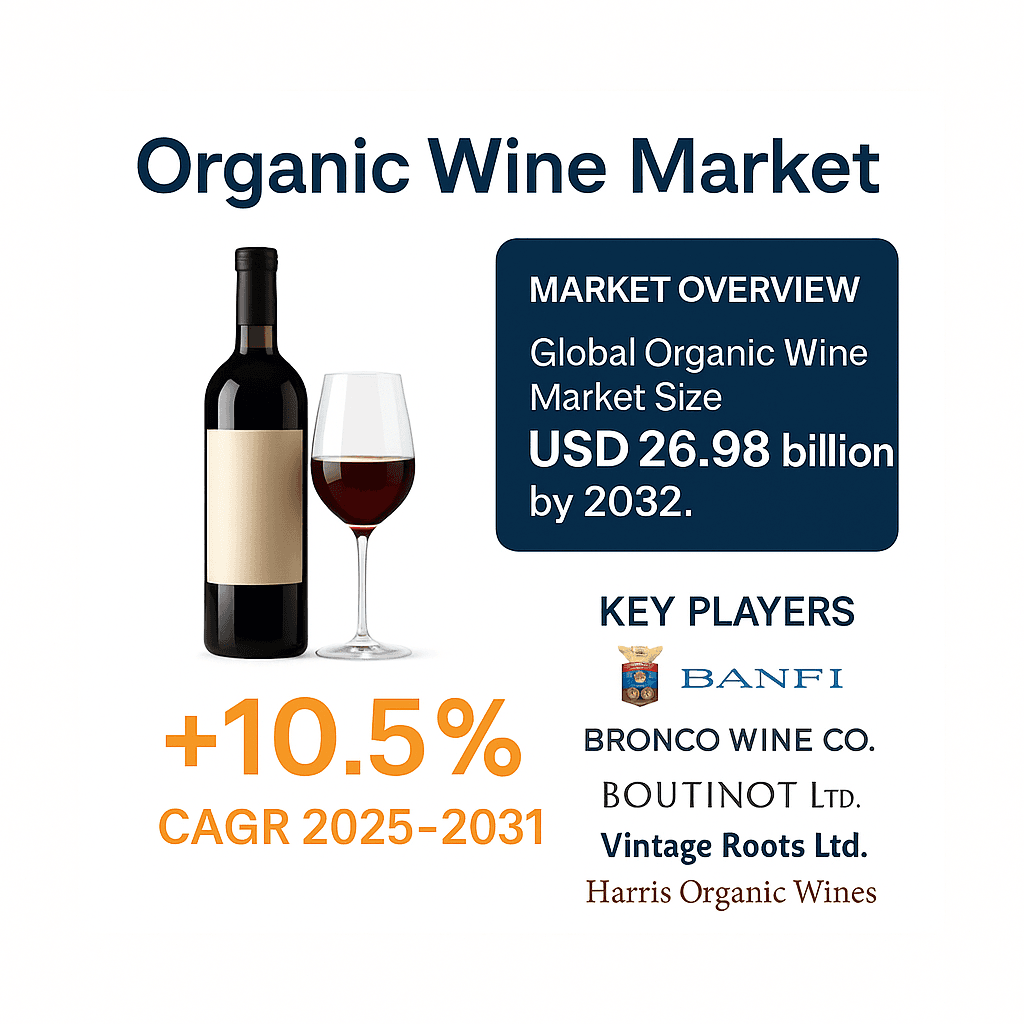
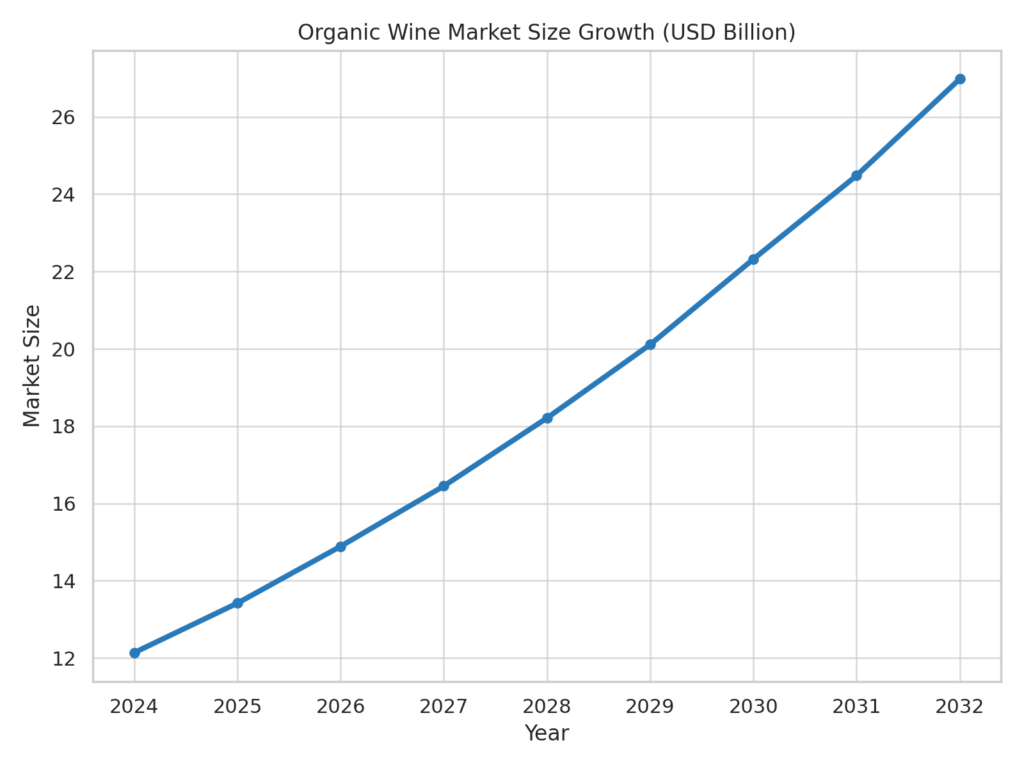
The global organic wine market—valued at USD 12.14 billion in 2024—is projected to reach approximately USD 26.98 billion by 2032, growing at a robust CAGR of 10.5% during the 2025–2032 period.
Global Organic Wine Market Estimation & Definition
Organic wine refers to wine produced from grapes grown without the use of synthetic fertilizers, herbicides, pesticides, or fungicides. The organic certification also limits additives and interventions in the winemaking process, depending on regional standards. These wines are seen as a healthier and more environmentally friendly alternative to conventional wines, with growing popularity among both health-conscious and eco-aware consumers.
The market is currently valued at USD 12.14 billion (2024) and is expected to rise to USD 26.98 billion by 2032, marking an impressive CAGR of 10.5% over the forecast period.
Global Organic Wine Market Growth Drivers & Opportunities
Health and Wellness Trends:
The rising global focus on healthy living and reducing chemical intake has led to an increase in demand for organic food and beverage products, including wine. Consumers are increasingly choosing organic options due to perceived health benefits, such as reduced exposure to synthetic pesticides and preservatives.
Environmental Sustainability:
The organic wine movement is closely tied to sustainability and eco-conscious lifestyles. Organic vineyards use environmentally responsible methods that preserve biodiversity, reduce soil degradation, and lower carbon footprints.
Premiumization and Perceived Quality:
Organic wines are often associated with higher quality and craftsmanship. As consumer palates become more sophisticated, the desire for natural and artisanal products has elevated organic wine’s positioning as a premium product in both retail and hospitality.
Regulatory and Labeling Support:
Government regulations and labeling systems in Europe, North America, and other regions support the transparency and trustworthiness of organic claims. Certifications such as USDA Organic and EU Organic Label have helped build consumer confidence and fuel growth.
Packaging Innovations:
The adoption of alternative and sustainable packaging such as cans, PET bottles, and lightweight glass is opening up new avenues for distribution, particularly in e-commerce and on-the-go consumption markets.
Key Opportunities Include:
Expansion in emerging markets where awareness and demand are rising
Development of low- and no-sulfite organic wines
Strategic partnerships with retailers and hotels to enhance distribution reach
Adoption of AI and smart farming to increase organic yield efficiency
Global Organic Wine Market Segmentation Analysis
The organic wine market can be segmented by product type, packaging, distribution channel, and region.
Global Organic Wine Market By Product Type
Red Organic Wine: The leading category due to its antioxidant benefits and strong consumer acceptance. Red wine remains the most widely consumed wine globally and dominates the organic segment.
White Organic Wine: Gaining traction, especially in colder-climate countries like Germany where white wine production is prevalent. Its lighter profile appeals to a growing base of casual and younger wine drinkers.
Global Organic Wine Market
By Packaging Type
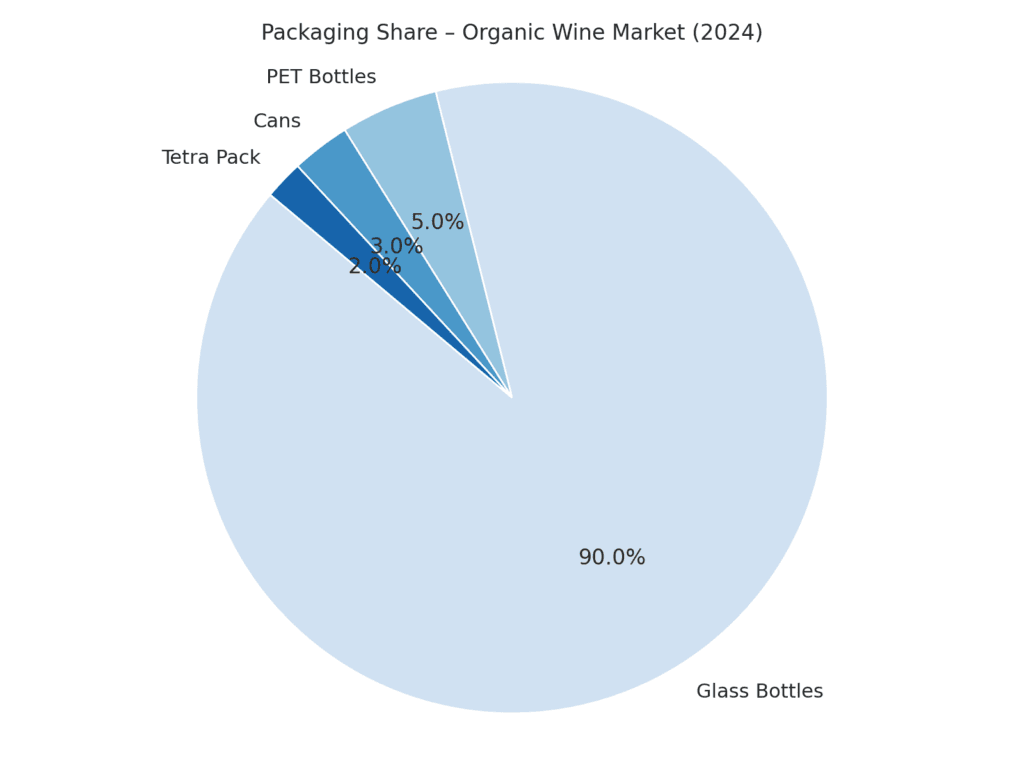
Glass Bottles: Remain the dominant packaging type due to consumer expectations and brand positioning. Around 90% of the market is still in glass.
Cans & PET Bottles: Lightweight and eco-friendly formats are rapidly gaining favor among younger demographics and for outdoor events.
Tetra Pak & Others: Cost-effective and sustainable alternatives, though currently a niche portion of the market.
Global Organic Wine Market By Distribution Channel
Off-Trade: This includes retail chains, organic stores, wine shops, and online platforms. Currently holds the largest share of the market.
On-Trade: Comprising restaurants, bars, and hotels, this segment is seeing renewed growth post-pandemic as consumers return to dining out.
By Region
North America
Europe
Asia-Pacific
South America
Middle East & Africa
Global Organic Wine Market Country-Level Analysis
United States
The U.S. organic wine market is witnessing rapid growth driven by health-conscious consumers and rising demand for clean-label products. Urban populations, millennials, and Gen Z are particularly drawn to brands that emphasize sustainability and minimal intervention winemaking.
With well-established USDA Organic certification and clear labeling, the U.S. market benefits from strong consumer trust. Distribution has expanded from boutique wine shops to mainstream supermarket chains and online platforms, with organic wines now featured on restaurant wine lists and subscription boxes.
Germany
Germany is one of the leading markets for organic wine in Europe, particularly for white wine. The country has a long tradition of organic farming and strong regulatory infrastructure, making it fertile ground for market expansion.
German consumers value both the health and environmental benefits of organic wine, and many local vineyards have transitioned to full organic or biodynamic production. The growth is further supported by public funding initiatives and increasing availability through mainstream retail channels.
Global Organic Wine Market Competitor Analysis
The organic wine market includes a dynamic mix of global giants, regional players, and innovative boutique wineries. Competition is based not only on volume but also on sustainability credentials, flavor profiles, certifications, and pricing.
Key Players Include:
- Organic Wine Market Key Players
North America
1. Banfi Vintners (Old Brookville, New York, USA)
2. Bronco Wine Co. (Ceres, California, USA)
3. Charlie and Echo (San Diego, California, USA)
4. Frey Vineyards (Redwood Valley, California, USA)
5. Grgich Hills Estate (Rutherford, California, USA)
6. Jackson Family Wines Inc. (Santa Rosa, California, USA)
7. King Estate Winery (Eugene, Oregon, USA)
8. The Organic Wine Co. (San Rafael, California, USA)
9. Wine Cellar Group (Elmsford, New York, USA)
10. Dry Farm Wines (Napa, California, USA)
11. Winc Inc. (Los Angeles, California, USA)Europe
1. Boisset Family Estates (Nuits-Saint-Georges, France)
2. Boutinot Ltd. (Stockport, England, UK)
3. Grands Vignobles En Mediterranee SARL (Languedoc-Roussillon, France)
4. Vintage Roots Ltd. (Hampshire, England, UK)
5. Elgin Ridge Wines (Originally South Africa)Asia Pacific
1. Casella Wines Pty. Ltd. (Yenda, New South Wales, Australia)
2. Harris Organic Wines (Swan Valley, Western Australia, Australia)
3. Organic Wine Pty Ltd (Australia)
4. Radford Dale Pty Ltd (Stellenbosch, South Africa)
5. Mount Avoca (Avoca, Victoria, Australia)
6. Tamburlaine Organic Wines (New South Wales, Australia)Middle East & Africa
1. Avondale (Paarl, Western Cape, South Africa)
2. Radford Dale Pty Ltd (Stellenbosch, Western Cape, South Africa)South America
1. Vina Concha y Toro SA (Santiago, Chile)
2. Emiliana Organic Vineyards (Casablanca Valley, Chile)
Emerging Innovators:
Boutique winemakers focusing on natural, orange, and low-sulfite wines are gaining traction among wine enthusiasts seeking unique, artisanal products.
Wineries are also embracing e-commerce, virtual tastings, and direct-to-consumer models to reach younger, tech-savvy buyers.
Competitive Strategies By Distribution Channel:
Certifications and Branding: Emphasis on organic, biodynamic, and vegan certifications to gain market trust.
Acquisitions and Partnerships: Strategic M&A activities and partnerships with retailers to expand footprint.
Product Diversification: Introducing new grape varieties, blends, and limited-edition vintages.
Global Organic Wine Market Press Release Conclusion
The Global Organic Wine Market is poised for remarkable expansion over the next decade. The convergence of health awareness, environmental concerns, evolving consumer preferences, and regulatory support has positioned organic wine as a leading growth segment in the global wine industry.
With an expected CAGR of 10.5%, the market will nearly triple by 2032. Red wine continues to lead, while innovative packaging and off-trade distribution dominate. Country-level growth in the U.S. and Germany underscores both established and emerging opportunities.
The competitive landscape is shifting rapidly with players large and small investing in sustainability, transparency, and consumer engagement. Organic wine is no longer a niche—it’s a movement aligned with the values of the modern consumer.
To View Report On Instant Noodles Market:
https://fmcgpresswire.com/global-instant-noodles-market-size/

