
Global Palm Kernel Oil Market Size Poised to Reach USD 69.46 Billion by 2030, Driven by Expanding Applications in Food, Cosmetics, and Biofuels
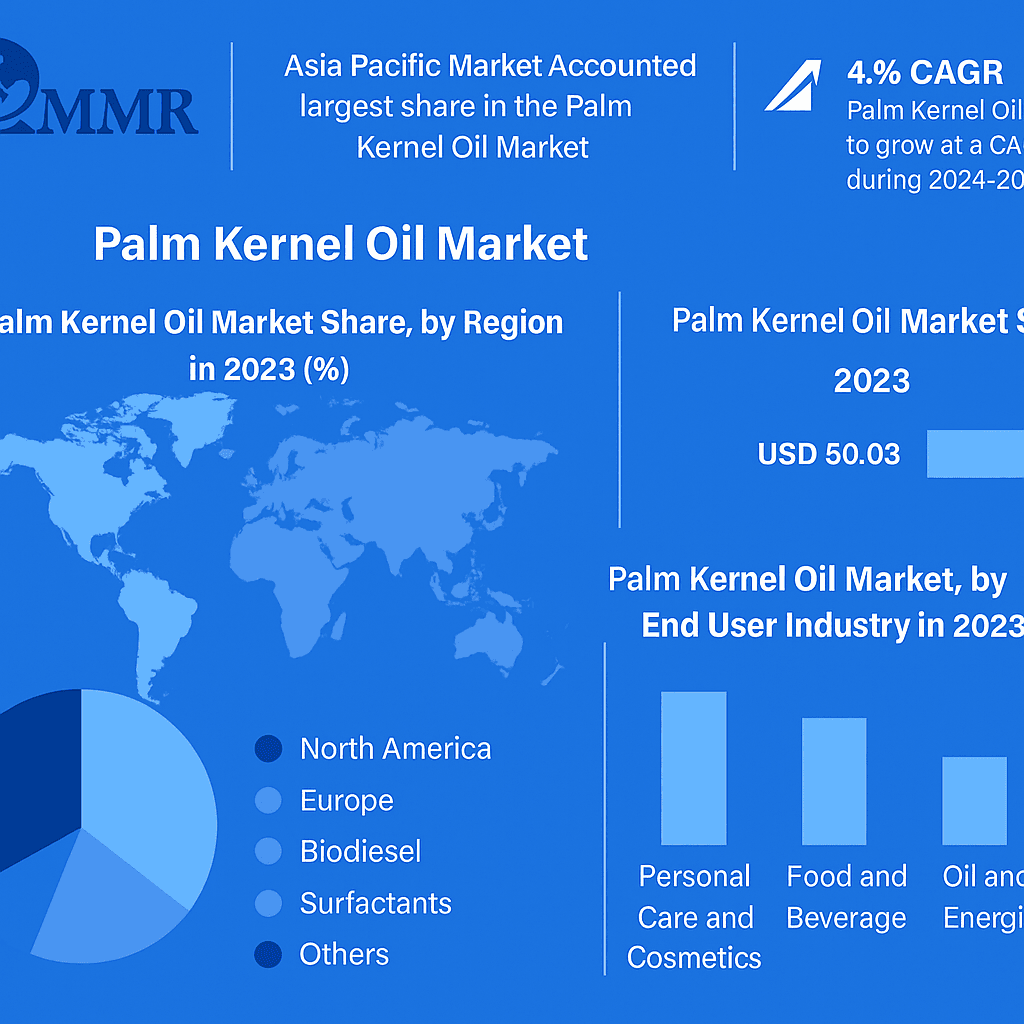
The global palm kernel oil market is projected to grow from USD 50.03 billion in 2023 to USD 69.46 billion by 2030, registering a CAGR of 4.8% during the forecast period, according to Maximize Market Research. This growth is attributed to increasing demand across various sectors, including food and beverage, personal care, and biofuels.
Market Estimation & Definition
Palm kernel oil, extracted from the seed of the oil palm fruit (Elaeis guineensis), is distinct from palm oil derived from the fruit’s pulp. Known for its high saturated fat content and stability at high temperatures, palm kernel oil is widely used in cooking, baking, and as an ingredient in cosmetics and personal care products. Its affordability and versatility make it a preferred choice in various industries.
Get The Sample Copy Of The Report :
https://www.maximizemarketresearch.com/request-sample/82451/
Market Growth Drivers & Opportunities
Several factors are propelling the growth of the palm kernel oil market:
Diverse Applications: Palm kernel oil’s use in food products like chocolate, butter, and ice cream, as well as in cosmetics such as lotions and soaps, is expanding.
Cost-Effectiveness: Its lower price point compared to other vegetable oils makes it an attractive option for manufacturers.
Biofuel Production: The rise in biofuel demand, particularly biodiesel, is creating new avenues for palm kernel oil utilization.
- Population Growth: An increasing global population is driving demand for food and personal care products, indirectly boosting palm kernel oil consumption
- Sustainability Initiatives: Programs like India’s Sustainable Palm Oil Production Program (SPOPP) aim to promote responsible production, enhancing market prospects.
Segmentation Analysis
By Product:
Fractionated Palm Kernel Oil: Expected to hold the largest market share by 2030, this variant is processed to separate different fat components, offering advantages in various applications.
Primary Palm Kernel Oil: Comprising mainly acylglycerol, this type is used in food and industrial applications.
By Application:
Edible Oil: Dominates the market, used extensively in dairy products, butter, ghee, and ice cream.
- Biodiesel: Growing demand for renewable energy sources is increasing the use of palm kernel oil in biodiesel production.
- Cosmetics: Used in manufacturing creams, lotions, and soaps.
- Lubricants and Surfactants: Employed in industrial applications to reduce friction and surface tension.
By End-User Industry:
Personal Care and Cosmetics
Food and Beverage
Oil and Energy
Others
By Distribution Channel:
Online
Offline
Country-Level Analysis
United States:
In the U.S., palm kernel oil is primarily imported for use in food processing and personal care industries. Government initiatives promoting renewable energy and sustainable agriculture have indirectly supported market growth. The rising popularity of biofuels and natural personal care products is further propelling demand.
Germany:
Germany is a significant consumer in Europe, especially in the biodiesel sector. Government policies favoring renewable energy have encouraged the use of palm kernel oil in biodiesel production. The automotive industry’s shift towards biofuels is a major driver of this trend. \
Competitive Landscape
The palm kernel oil market is characterized by the presence of several key players:
Golden Agri Resources Ltd.
Godrej Agrovet Ltd.
PT Astra Agro Lestari Tbk.
Cargill Inc.
United Palm Oil Industry Public Company Ltd.
Wilmar International Ltd.
Sime Darby
Kulim Bhd.
Musim Mas Group
Alami Group
IOI Corporation Berhad
London Sumatra
Bunge Limited
AAK AB
Korindo Group
These companies are focusing on mergers and acquisitions, sustainable practices, and expanding their product portfolios to strengthen their market positions.
To view full Report : https://www.maximizemarketresearch.com/market-report/global-palm-kernel-oil-market/82451/
The global palm kernel oil market is on a robust growth trajectory, driven by its diverse applications, cost-effectiveness, and the rising demand for sustainable and renewable products. With significant opportunities in food, cosmetics, and biofuels, the market is poised for substantial expansion by 2030. Stakeholders are encouraged to invest in sustainable practices and innovative applications to capitalize on this growth.