

Global Seafood Processing Equipment Market Set to Reach USD 3.20 Billion by 2032, Powered by Innovation and Rising Demand
The global Seafood Processing Equipment Market is projected to grow from USD 2.43 billion in 2024 to approximately USD 3.20 billion by 2032, registering a Compound Annual Growth Rate (CAGR) of 3.5% during the forecast period. This trajectory reflects robust sectoral growth, propelled by increasing global seafood consumption, stricter food safety regulations, and a wave of technological innovations in processing automation.
Global Seafood Processing Equipment Market Estimation & Definition
Seafood processing equipment refers to the machinery and systems used for various steps in seafood production, including gutting, scaling, deboning, skinning, filleting, and slaughtering. These systems are deployed across processing types such as frozen, smoked, canned, dried, and value-added seafood products.
Valued at USD 2.43 billion in 2024, the market is expected to reach USD 3.20 billion by 2032, driven by automation trends and the rising demand for processed seafood across retail and food service sectors. Equipment is customized for seafood varieties like finfish, crustaceans, mollusks, and other aquatic species.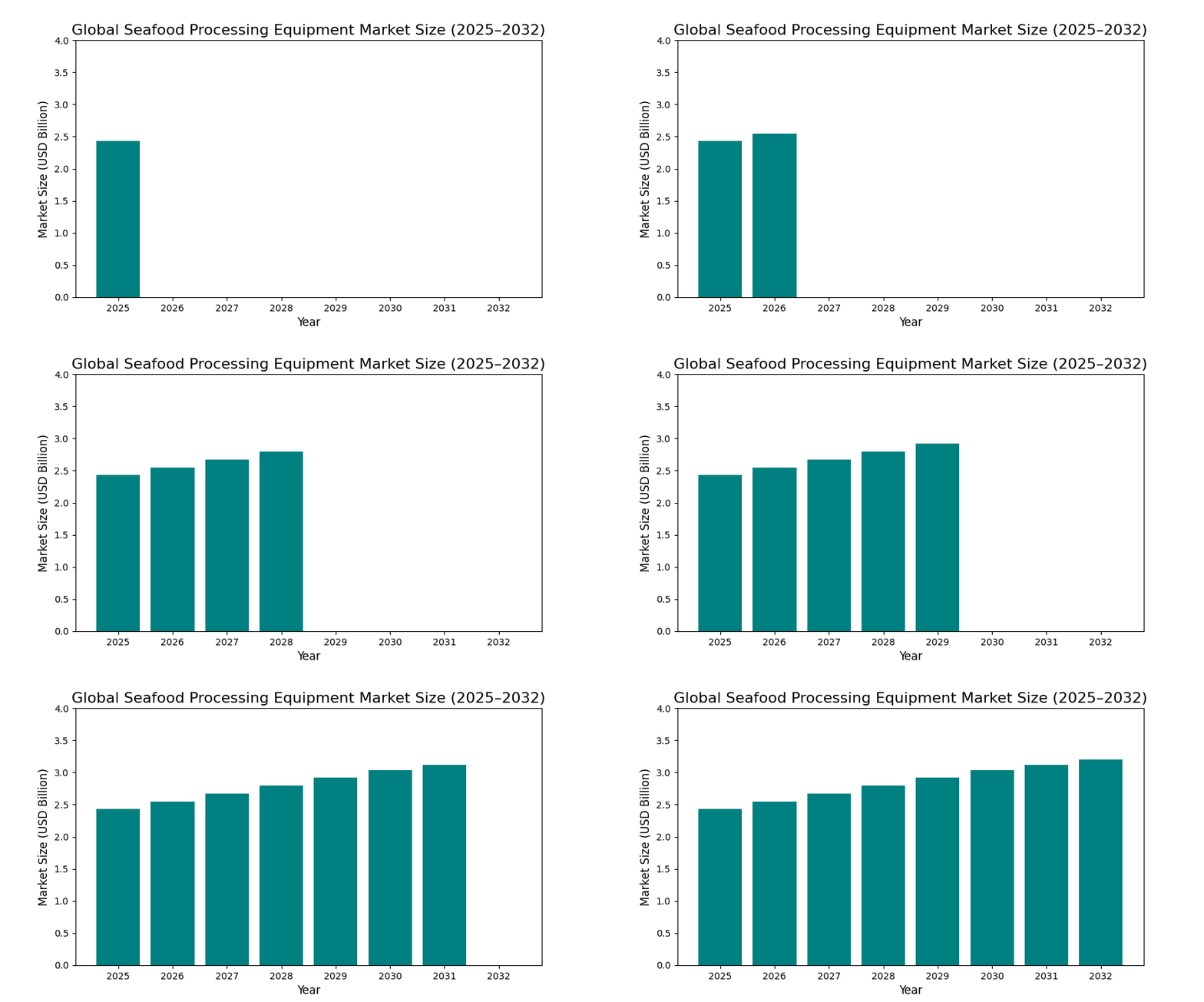
Global Seafood Processing Equipment Market
Growth Drivers & Opportunities
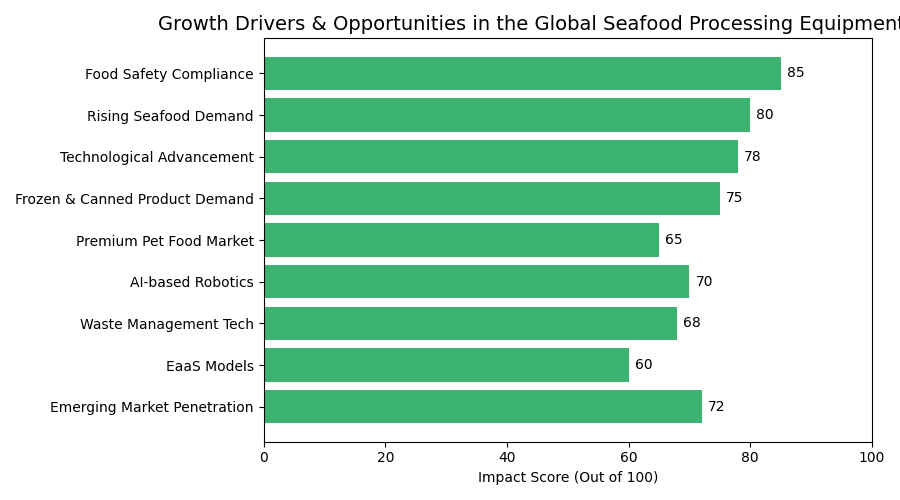
1. Food Safety Compliance and Traceability
Stricter global food safety and traceability norms have driven seafood processors to adopt advanced equipment that minimizes contamination risks and ensures hygienic handling. Processing machinery with clean-in-place (CIP) systems, anti-bacterial surfaces, and precision grading ensures compliance with evolving quality and safety standards.
2. Rising Global Seafood Demand
Increasing health consciousness among consumers is pushing global seafood consumption upward. Seafood, rich in protein and Omega-3 fatty acids, is a preferred dietary component. This demand spike is catalyzing the expansion of processing plants, particularly in emerging markets.
3. Technological Advancement
Robotics, artificial intelligence (AI), and IoT-enabled systems are being integrated into processing equipment to improve yield, reduce waste, and optimize labor. Smart filleting, automated grading, and real-time monitoring systems are now standard offerings from leading equipment suppliers.
4. Growing Demand for Frozen and Canned Seafood
Frozen seafood dominated the application segment in 2024, accounting for over 20% of the market. Canned seafood, due to its long shelf life and convenience, is projected to grow at the fastest CAGR through 2032. These trends necessitate investment in freezing, sealing, sterilization, and packaging equipment.
5. Emerging Pet Food Market
The use of high-quality seafood in premium pet food has opened new avenues for equipment manufacturers. As pet owners demand nutritionally rich, human-grade seafood for their animals, processors are upgrading systems to meet these specialized requirements.
To View Full Report: https://www.maximizemarketresearch.com/market-report/global-seafood-processing-equipment-market/17367/
Key Opportunities Ahead:
Adoption of AI-based robotic deboning and grading systems
Waste-reduction and by-product processing technologies
Growth in Equipment-as-a-Service (EaaS) models for mid-sized operators
Penetration of processing equipment in Asia-Pacific and African aquaculture markets
Global Seafood Processing Equipment Market
Segmentation Analysis
By Equipment Type:
Gutting
Slaughtering
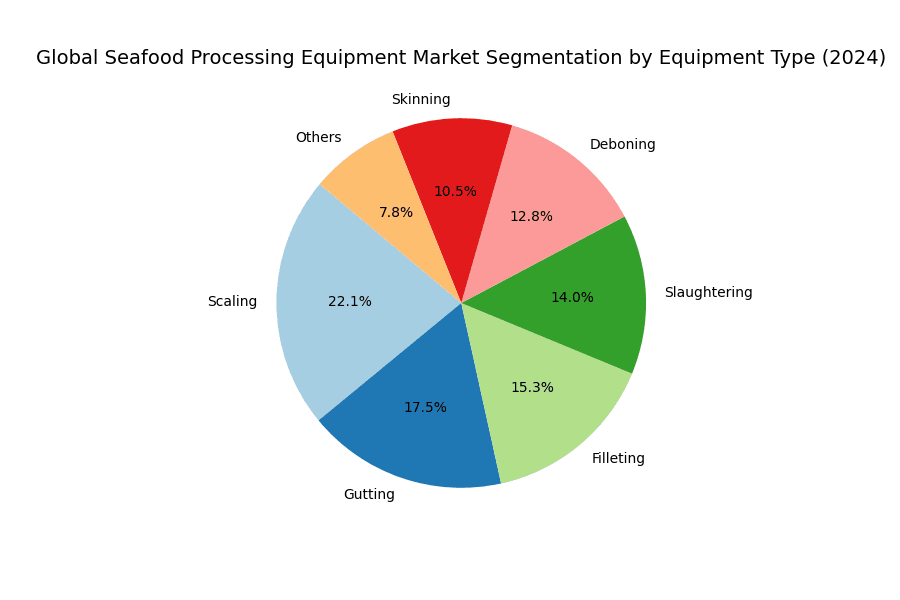
Scaling – The leading subsegment in 2024 with a strong global presence due to its applicability across finfish processing
Skinning
Deboning
Filleting
Others
Scaling and gutting machinery are critical in both small-scale and industrial plants. Filleting and deboning equipment are gaining adoption as consumers shift toward ready-to-cook and portion-controlled seafood products.
Global Seafood Processing Equipment Market By Application:
Frozen – Held over 20% market share in 2024
Smoked
Canned – Expected to register the highest growth, driven by urban demand
Dried
Others
The frozen seafood segment benefits from expanding cold-chain infrastructure and rising exports. Canned and smoked products are seeing strong uptake in North America, Europe, and parts of Asia where convenience drives consumer choice.
Global Seafood Processing Equipment Market
By Seafood Type:
Finfish – Dominant due to high consumption and wide variety
Crustaceans
Mollusks
Others
Finfish leads in market value and processing volume. Crustaceans and mollusks require specialized machinery, which is gaining popularity in premium seafood production.
By Region:
North America
Europe
Asia-Pacific
Middle East & Africa
South America
Asia-Pacific was the largest regional market in 2024, owing to the high availability of raw seafood and the presence of multiple processing hubs. However, North America and Europe continue to upgrade to automated systems, making them attractive high-margin markets.
4. Country-Level Analysis
United States
The U.S. seafood processing equipment market stood at approximately USD 659 million in 2024. The country has a highly regulated food processing industry, emphasizing hygiene and automation. High seafood consumption, coupled with FDA compliance requirements, has pushed processors to adopt cutting-edge systems. In addition to domestic consumption, the U.S. is a key exporter, adding demand for standardized, efficient processing equipment.
Germany
Germany plays a pivotal role in the European market due to its technological leadership in industrial equipment. German firms are at the forefront of automation, robotics, and waste management solutions within seafood processing. The country’s strong seafood import and processing capabilities, combined with high quality standards, create strong demand for premium machinery and innovative processing lines.
Global Seafood Processing Equipment Market Commutator Analysis (Competitive Landscape)
The seafood processing equipment industry is moderately consolidated, with several global and regional players competing on the basis of innovation, price, service, and technical support.
Key Players Include:
Companies specializing in gutting, filleting, and packaging equipment
Firms offering turnkey solutions for processing lines and cold-chain integration
Local manufacturers catering to budget-sensitive emerging markets
Some of the Seafood Processing Equipment Market, Key Players are:
1. Ross Industries, Inc (US) 2. Pisces Fish Machinery Inc. (US) 3. Bettcher Industries, Inc. (US) 4. Key Technology, Inc. (US) 5. CTB, INC. (US) 6. The Middleby Corporation (US) 7. MTC Fod Equipment Inc. (US) 8. JBT Corporation (US) 9. Morris & Associates, Inc. (US) 10. Polar Systems Ltd. (UK) 11. Seafood Technology Limited (UK) 12. GEA Group Aktiengesellschaft (Germany) 13. BAADER Group (Germany) 14. RISCO S.p.A (Italy) 15. Minerva Omega group s.r.l. (Italy) 16. Smokey Bay Seafood Group (Canada) 17. Marel (Iceland) 18. Kaj Olesen A/S (Denmark) 19. Cabinplant (Denmark) 20. Carsoe (Denmark) 21. BRAHER INTERNACIONAL, S.A. (Spain) 22. Marine Delta International Co., Ltd (Taiwan) 23. Shandong Atlas Refrigeration Technology Co.,Ltd. (China) 24. Seac Ab (Sweden) 25. Leroy Seafood Group ASA (Norway) 26. Royal Greenland A/S (Greenland)
Global Seafood Processing Equipment Market Competitive Forces:
Threat of New Entrants – Moderate, due to high capital requirements and regulatory compliance
Bargaining Power of Suppliers – Moderate, especially for proprietary components and sensors
Bargaining Power of Buyers – Moderate to high in commoditized segments; low in customized automation
Threat of Substitutes – Low; no alternative to mechanized processing at industrial scale
Rivalry Among Existing Competitors – High, with continuous innovation and M&A activity
Top-tier companies are investing in smart equipment and vertically integrated systems, offering clients full control from slaughter to sealing. Product differentiation, after-sales service, and flexible financing are key competitive advantages.
Global Seafood Processing Equipment Market Press Release Conclusion
The global Seafood Processing Equipment Market is set on a promising path, growing from USD 2.43 billion in 2024 to USD 3.20 billion by 2032, underpinned by consistent demand and technological advancement. The shift toward value-added seafood, automation, and sustainability is reshaping the global processing landscape.
Markets in North America and Europe are modernizing rapidly, while Asia-Pacific remains a production powerhouse. Equipment types like scaling, filleting, and canning systems are poised for expansion, particularly in sectors focused on ready-to-eat meals, pet nutrition, and frozen exports.
With sustainability and efficiency as guiding principles, equipment manufacturers and processors are collaborating to build smarter, safer, and cleaner processing facilities. This momentum, combined with the industry’s adaptability, positions the seafood processing equipment market for long-term growth, innovation, and global transformation.
Read Our More Related Report: https://fmcgpresswire.com/tissue-paper-market-to-reach-9-91-billion-by-2030-with-growing-demand/

